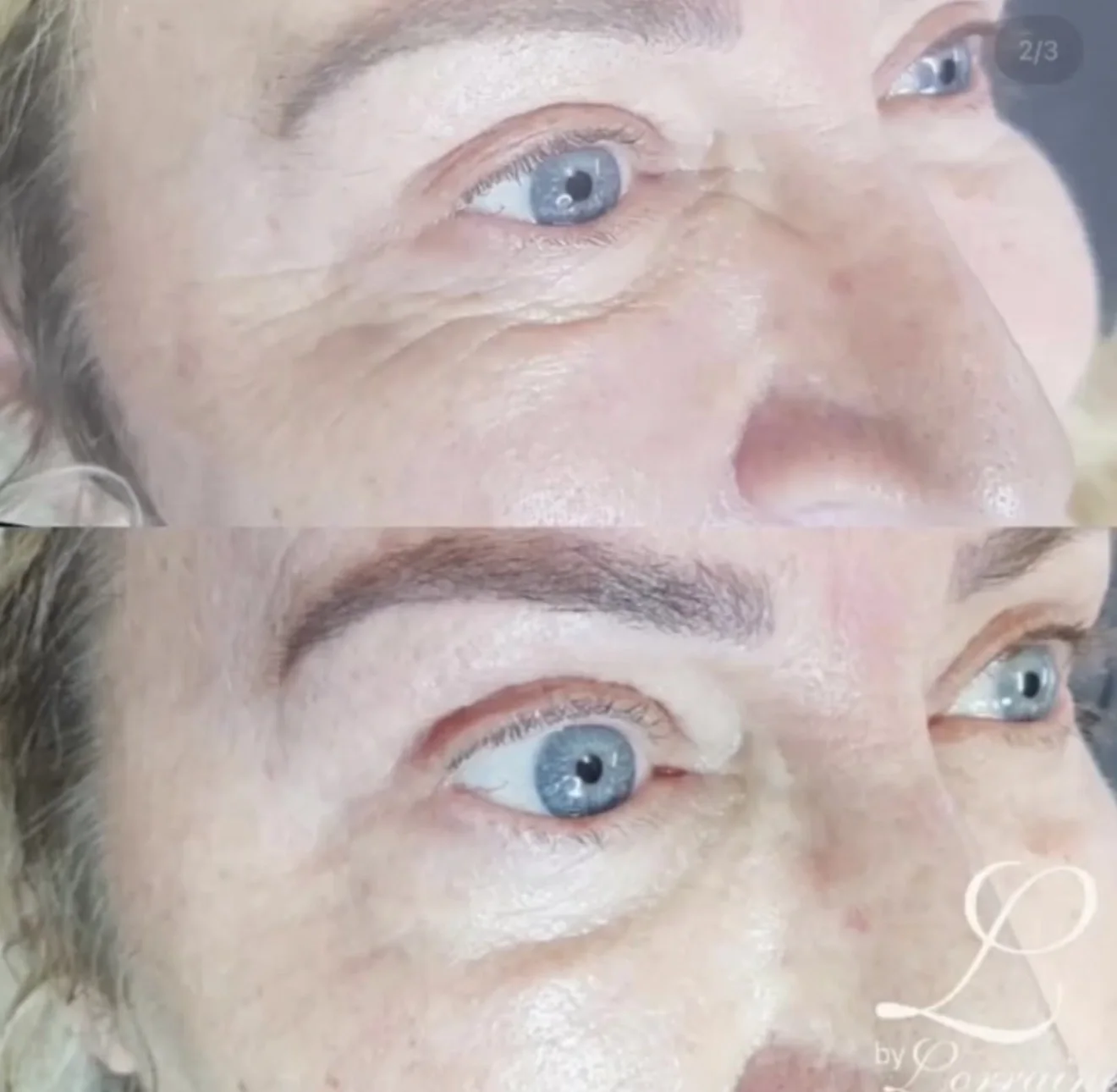
About the plasma fibroblast eye lift
The skin around the eyes is the thinnest on the face, so it's often the first place ageing shows — upper lids that begin to hood and sit lower over the eye, crepey texture, and fine lines that deepen over time. A plasma fibroblast eye lift addresses this without surgery. Using a plasma pen, Lorraine creates a fine, controlled grid of tiny treatment points across the targeted skin. Each point contracts the skin instantly, and the healing response that follows lays down new collagen and elastin over the following weeks — the skin tightens and lifts.
It's one of the most-requested anti-ageing treatments at Lorraine's clinic, particularly with clients who are weighing up surgical blepharoplasty but want to try a lower-risk, lower-cost, no-anaesthetic option first.
How it works — the plasma grid
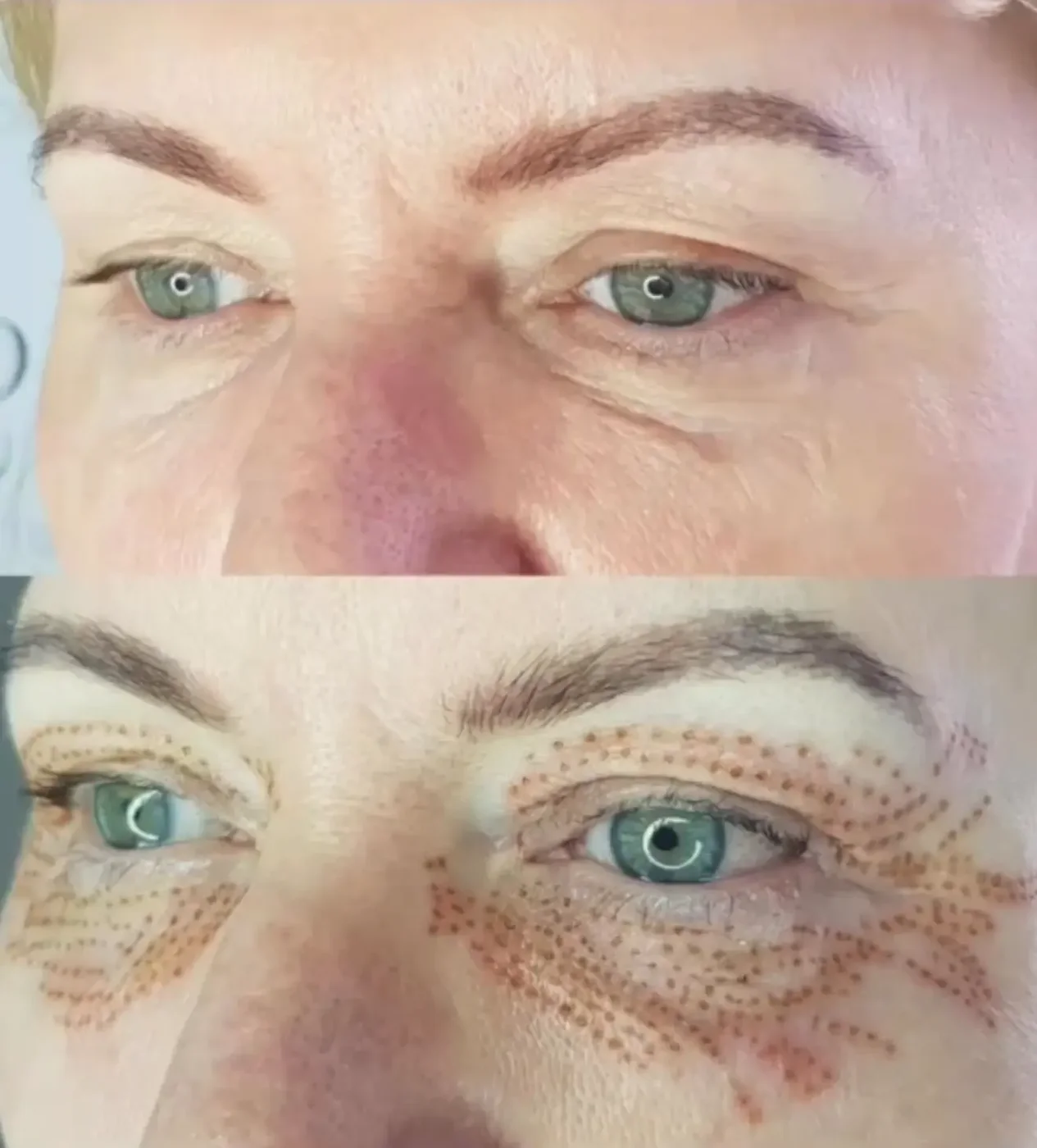
The treatment is precise and methodical. Lorraine maps the area first, then works across it placing each plasma point by hand in a deliberate pattern. The image below shows the eye area before treatment (top) and the plasma mapping grid in progress (bottom) — each dot is a controlled treatment point that tightens the skin around it.
Who it's for
- Hooded upper eyelids that have started to sit lower over the eye and affect how open it looks.
- Loose, crepey upper-lid skin and mild-to-moderate lower-lid laxity.
- Fine lines around the eyes (crow's feet) and under-eye crepiness.
- Clients considering surgical blepharoplasty who want to try a non-surgical option first.
- 40s, 50s and 60s with eyelid laxity that isn't yet at the point of needing surgery.
An honest word about surgery
Plasma fibroblast is genuinely effective for mild-to-moderate eyelid laxity — but it is not a face-lift and not a substitute for surgery in every case. For severe hooding, where there's a large amount of excess skin, a surgical blepharoplasty may still be the better answer. Lorraine will assess your specific eyelid anatomy at consultation and tell you honestly whether plasma is likely to give you the result you want, or whether a surgical opinion would serve you better. There's never any pressure to book.
Plasma fibroblast guides
What to expect
-
Consultation and honest assessment
Lorraine assesses your eyelid anatomy and the degree of laxity, and is honest about whether plasma fibroblast suits your case or whether a surgical opinion would serve you better. She'll explain what's realistic, the number of sessions likely needed, and the downtime involved.
-
Numbing
A topical numbing cream is applied about 30 minutes before treatment to keep the session comfortable. Most clients describe the treatment itself as a series of brief, small heat pricks — manageable, if not exactly pleasant.
-
The treatment (60–90 minutes)
Lorraine maps the area, then places the grid of plasma points by hand across the targeted eyelid skin. You'll see immediate tightening as the skin contracts around each point. Tiny carbon scabs (dots) form at each point during treatment.
-
Healing and shedding (5–10 days)
The small carbon dots stay on the skin and naturally shed over 5–10 days — don't pick them. Expect mild swelling for the first 2–3 days, especially in the morning. Most clients plan around a week of social downtime. Full written aftercare is provided.
-
Collagen builds (6–12 weeks)
Some tightening is visible immediately, but the full result develops over 6–12 weeks as fresh collagen forms and the skin continues to firm. The final result is what stays.
-
Repeat sessions if needed
Many clients reach their goal in one to three sessions spaced about eight weeks apart, depending on the starting laxity and the result they're after. Each session is booked and paid on its own — there's no package.