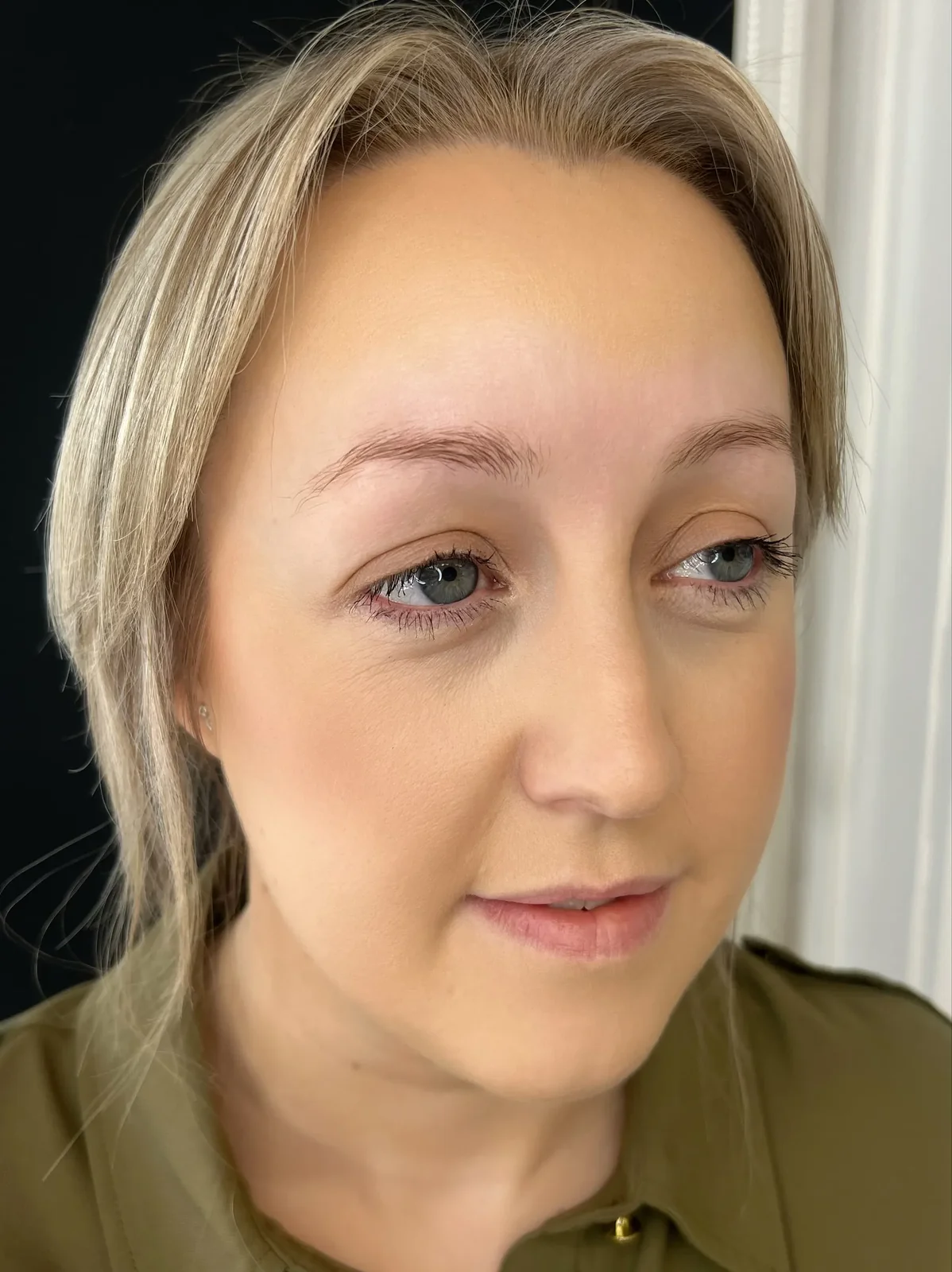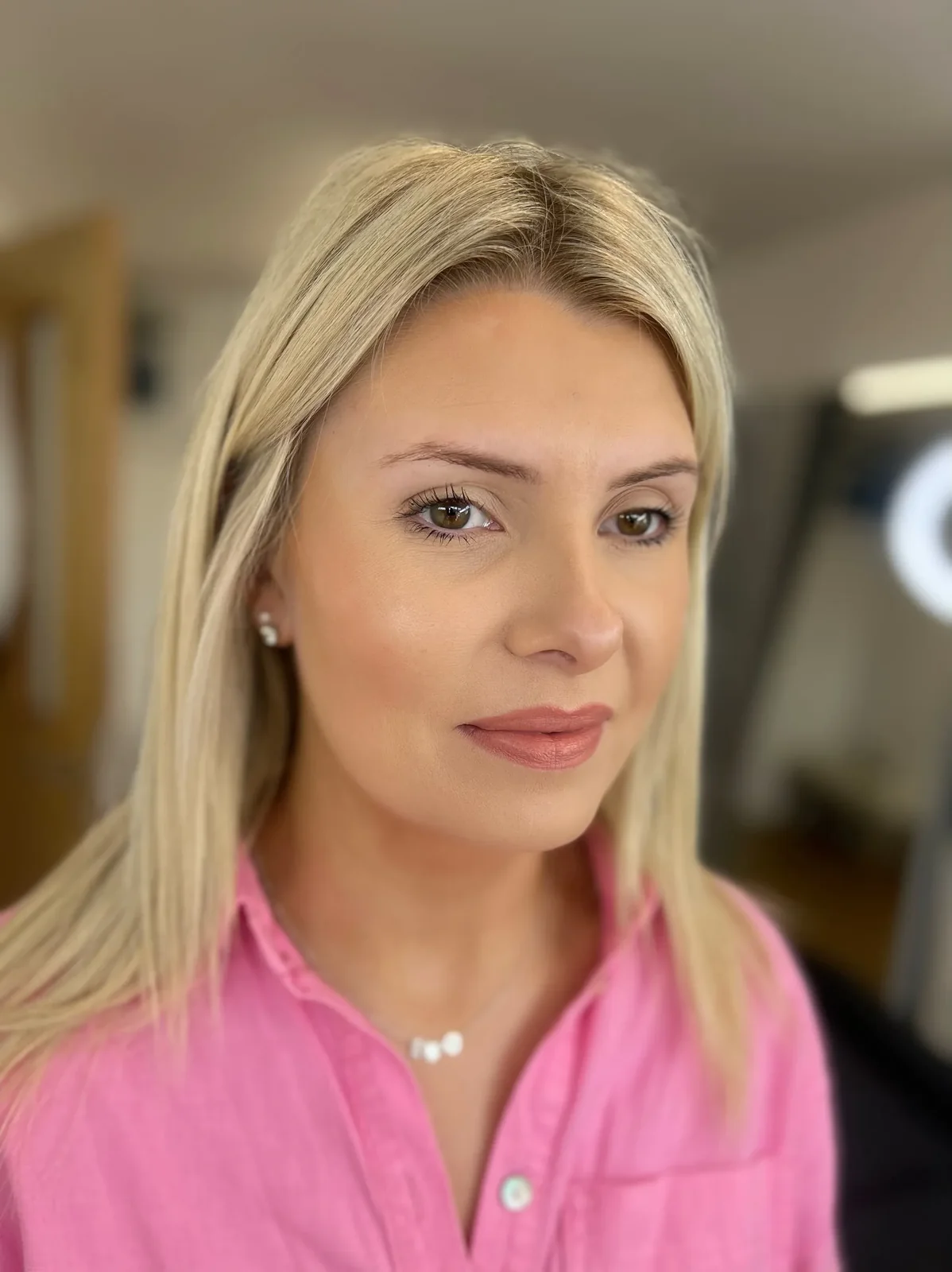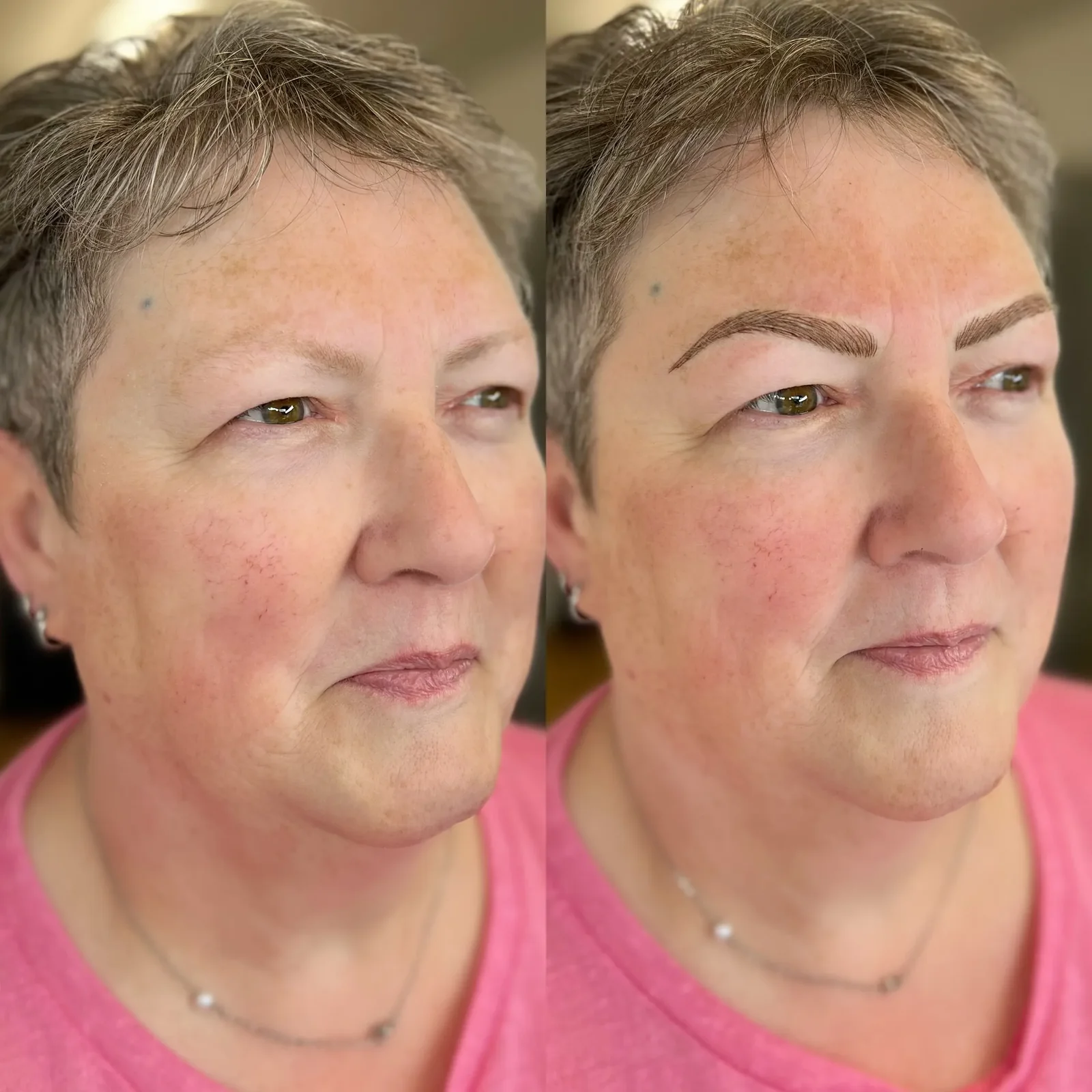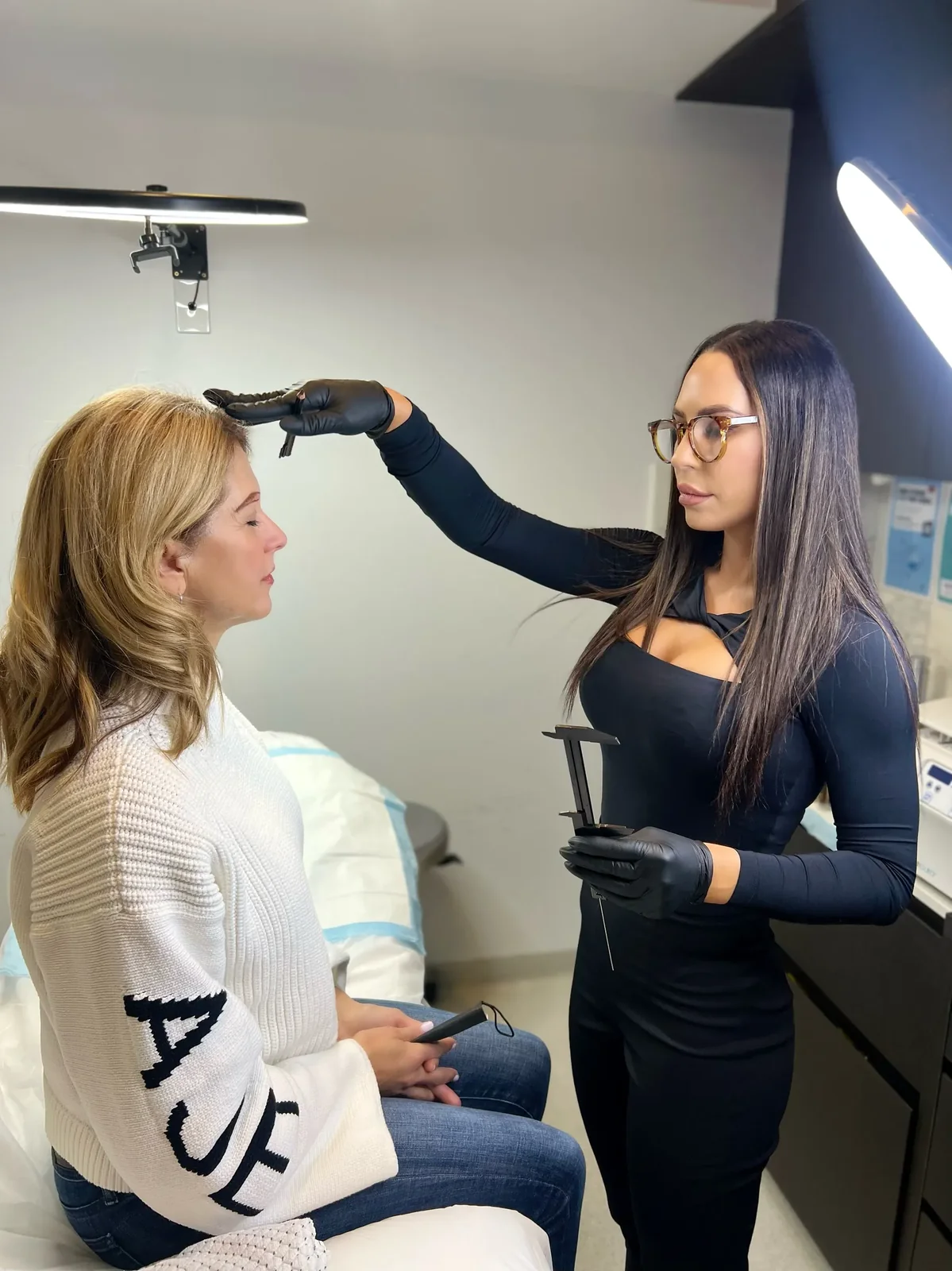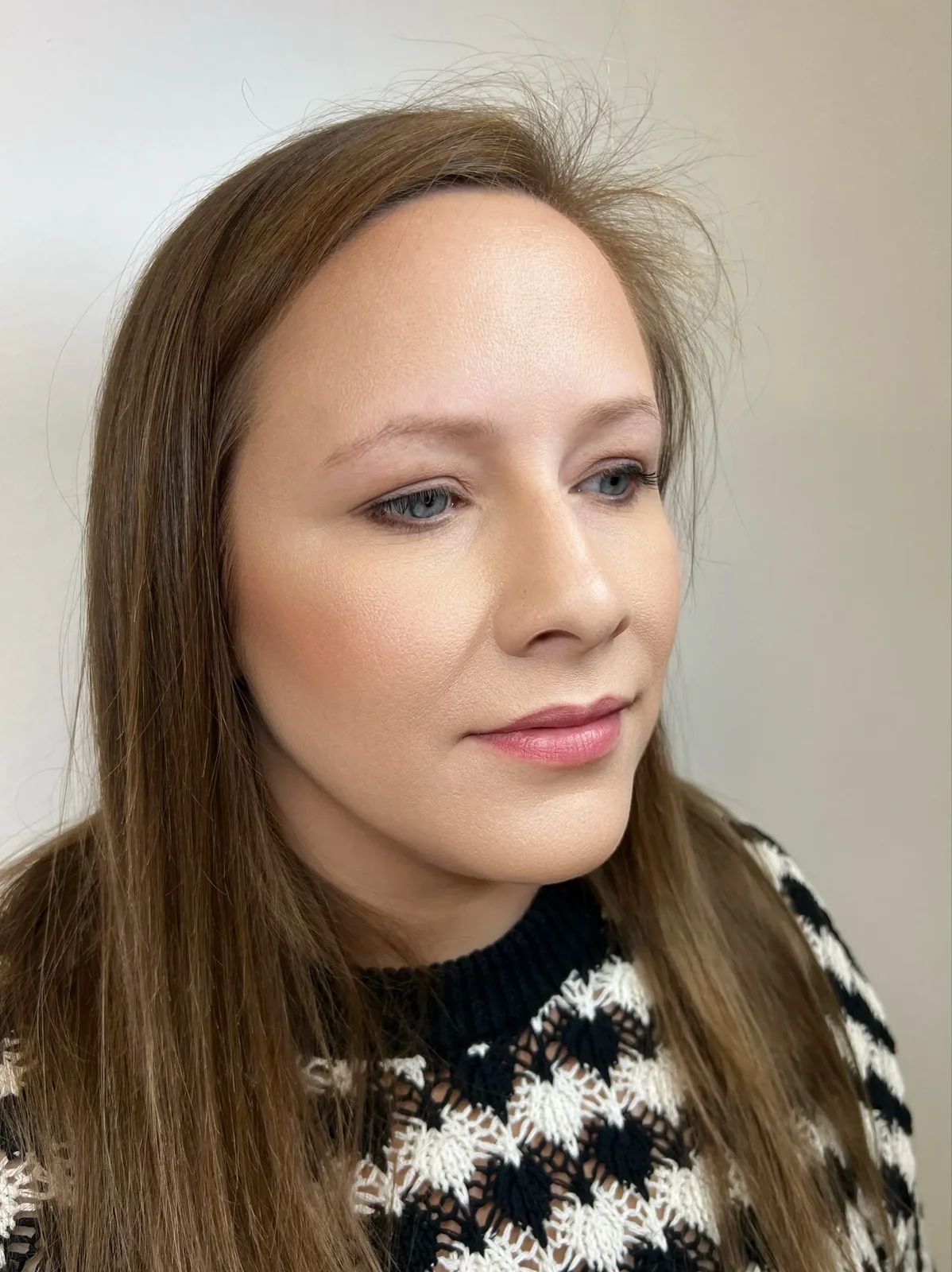
What does it actually mean to have "brow concerns"?
The phrase covers more than people expect. It includes the slow thinning of brows from your late 30s onwards, the bald patches left from a decade of plucking thin in the early 2000s, the way one brow sits visibly higher or shorter than the other when you finally look closely. It includes the brows that have always been pale and barely there, and the ones that used to be defined but now seem to fade into the surrounding skin. It includes brows lost to chemotherapy, alopecia areata, trichotillomania, thyroid changes, or simple genetic luck.
None of these are medical problems on their own. They're cosmetic and identity ones that have a real impact on how your whole face reads — brows frame the eyes and structure the upper face more than any other feature. Most clients come to Lorraine after years of pencilling, powder pomades, brow gels and tinted serums, getting a few hours of effect before the underlying concern reappears or smudges off in the gym.
Why come to Lorraine specifically?
Lorraine Nugent has 20 years in the cosmetic industry, with semi-permanent makeup as her specialisation over the last decade — and brow tattoo is the work she's best known for. She trained internationally with leading educators in Milan, London and Paris, refining the hand-tooled feather-stroke technique that produces fine, natural-looking hair strokes rather than the heavy block brows of older microblading. Her aesthetic clinic in Ashmore, Gold Coast attracts clients from across South-East Queensland for this work specifically.
If you're researching this for the first time, the page below explains the specific brow concerns Lorraine treats most often. If you already know what's bothering you, click straight into the relevant concern.