In short: A non-surgical eye lift uses plasma fibroblast to tighten hooded or droopy upper eyelids without cutting. Tiny controlled points make the eyelid skin contract and rebuild collagen, lifting the area over a few weeks. It's a strong option for mild-to-moderate hooding with no stitches and about a week of visible healing — but for heavy, significant excess skin, surgical blepharoplasty remains the more powerful fix.
What a non-surgical eye lift is
As we age, the upper eyelid skin can loosen and hood over the eye, making us look tired. A plasma fibroblast eye lift treats this without surgery: a fine plasma arc creates tiny points across the loose eyelid skin, which contracts immediately and then tightens further as collagen rebuilds over the following weeks — lifting and smoothing the lid.
How it compares to surgery (blepharoplasty)
Surgical blepharoplasty removes excess eyelid skin and gives the most dramatic, longest-lasting result — but it involves incisions, stitches, a general or local anaesthetic, cost, and longer recovery. A plasma fibroblast eye lift has no cutting or stitches, is more affordable, and needs about a week of visible healing — but its lift is best suited to mild-to-moderate hooding, and it may need a second session. For heavy, significant excess skin, surgery is usually the better choice.
Downtime and what to expect
Straight after, you\'ll have tiny dot-like crusts along the treated eyelid and some swelling for a few days — the eye area swells more than most. The little crusts flake away naturally over about a week. The final lift settles over the following weeks as collagen develops.
Who it suits
It\'s ideal for people with mild-to-moderate upper-lid hooding who want a real lift without surgery. It isn\'t suitable for everyone — skin type and tone matter, and very heavy hooding is better served surgically. Lorraine assesses your eyes honestly at a consultation and will tell you if plasma fibroblast is the right call.
See the non-surgical eye lift →
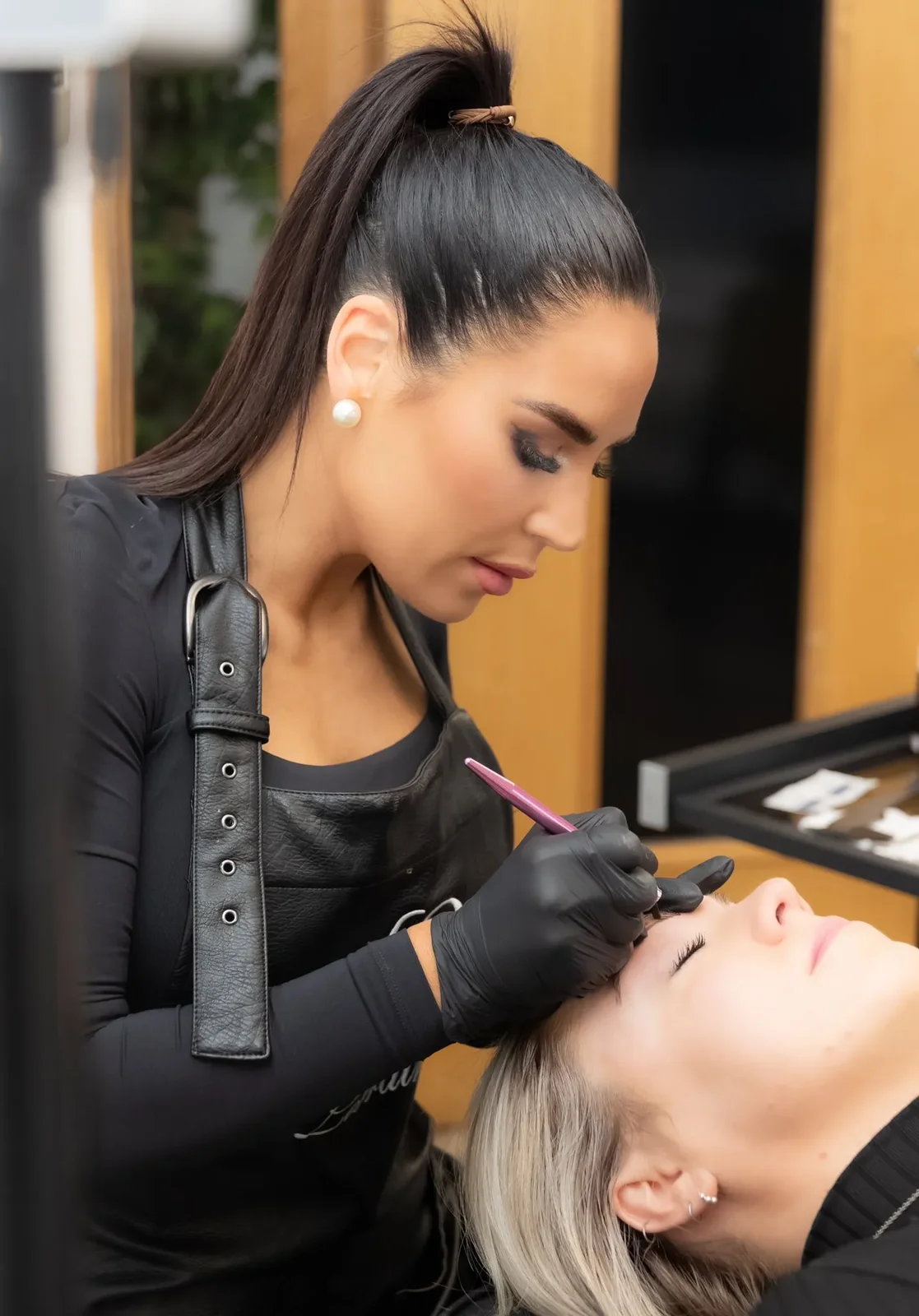
Cosmetic tattoo & paramedical practitioner with over 20 years in the cosmetic industry and international training in Milan, London and Paris. More about Lorraine →