What this stage actually feels like
Most people who come to Lorraine for areola work after breast cancer have travelled a long road already. Diagnosis, surgery, sometimes chemotherapy, sometimes radiation, often months of breast reconstruction across multiple surgeries. By the time the breast shape is restored, many describe a complicated mix of feelings — relief that the cancer is behind them, gratitude for their medical team, but also a quiet ongoing sadness when they look in the mirror. The reconstructed breast is there, but the nipple and areola aren't — or they're a reconstructed shape without colour. Every time you catch sight of your chest, the visual reminder is right there.
This is not a vanity concern, even though it can be tempting to frame it that way. Body image research consistently shows that what people see when they look at themselves directly affects how they feel about their recovery, their relationships, and their day-to-day confidence. For many breast cancer survivors, completing the visual restoration of the breast — finally seeing nipple and areola back in the mirror — is described as one of the most emotionally significant moments of the entire journey.
Why areola restoration matters as the final step
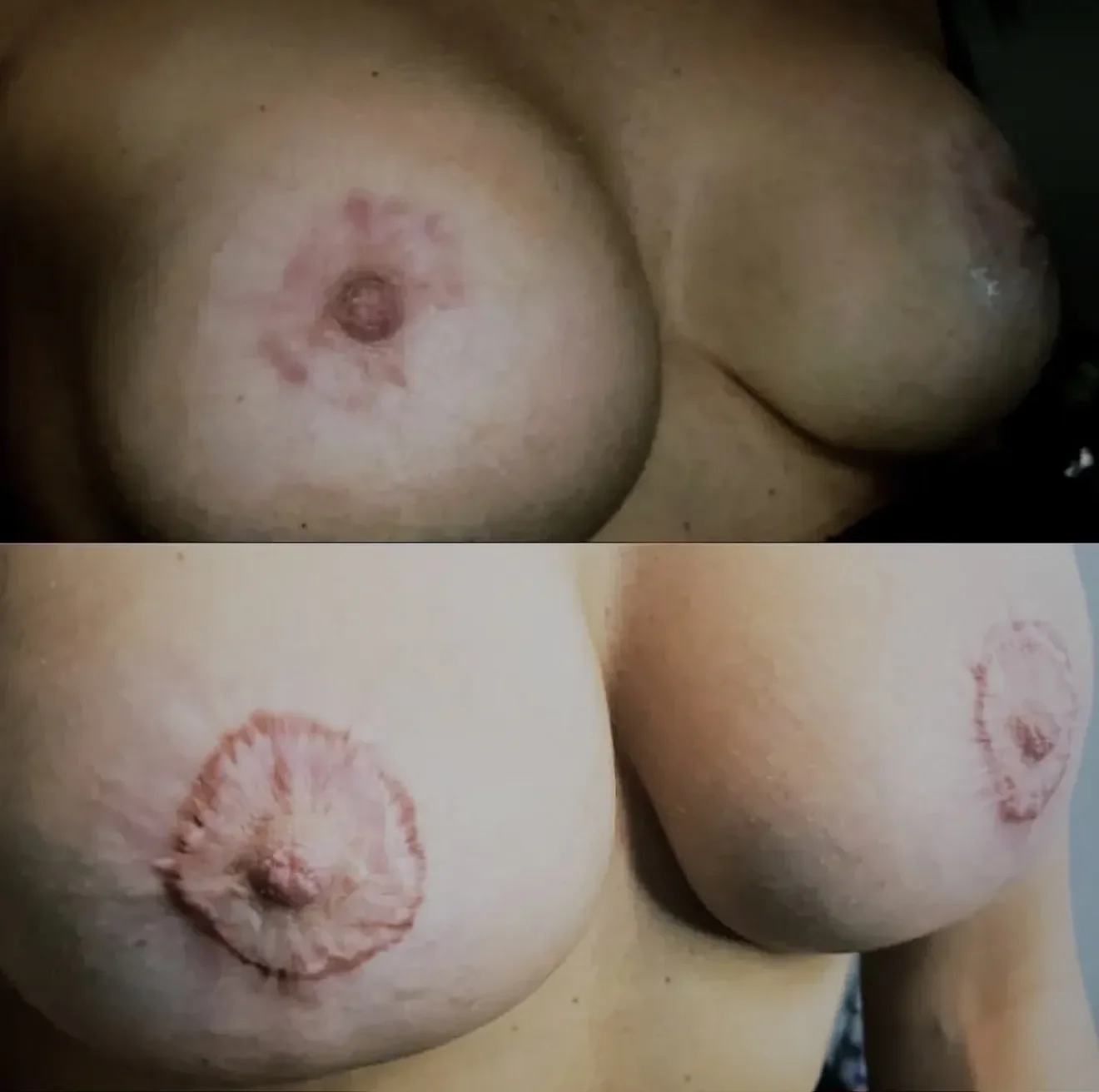
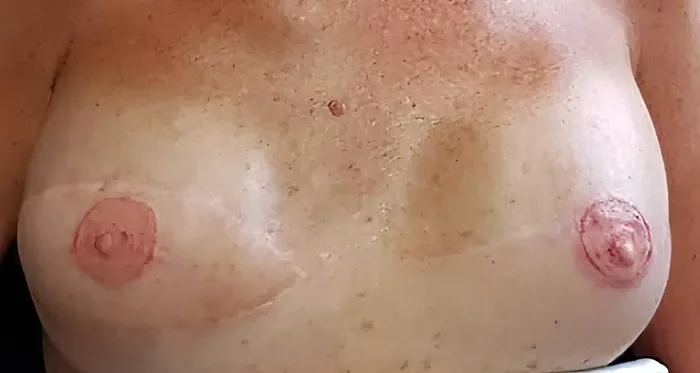
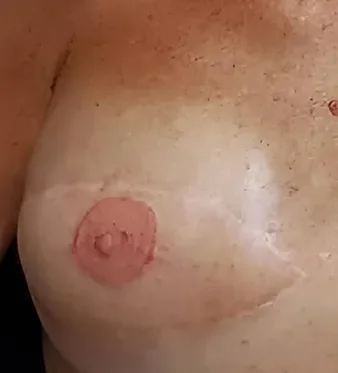
Areola restoration — sometimes called areola reconstruction through tattooing, distinct from surgical areola reconstruction — is a specialised form of semi-permanent makeup used specifically for medical and restorative cases. Three things change with areola restoration after breast cancer:
- The visual reminder softens. Where there was a flat reconstructed breast or a colourless reconstructed nipple, there is now a natural-looking areola with dimensional shading. The eye no longer goes straight to the absence — it goes to a complete-looking breast.
- Clothing fits and feels different. Many clients describe the strange experience of dressing for a normal day and being acutely aware of what is or isn't underneath their shirt. After restoration, that awareness fades for most people — the chest feels visually whole again.
- Intimacy and self-perception both shift. Plastic surgeons and breast surgeons across multiple authoritative sources report that restored areolas frequently improve clients' comfort with their own body and with intimate partners — not because the procedure changes the body's function, but because it changes how the body reads visually, including in mirrors and in the moment.
There is one thing areola restoration cannot do, and Lorraine is honest about it from the beginning: it cannot restore sensation. The procedure restores the appearance — colour, shape, dimensional shading, symmetry — not the feeling. For most clients at this stage, this is well understood by the time they reach Lorraine. But it's important to say it openly, because it's part of what makes the decision a personal one.
If you're not ready, that's also valid
Not everyone who has had a mastectomy chooses areola restoration, and that's a completely legitimate choice. Some people prefer the look of a "clean" reconstructed chest. Some choose decorative tattoo designs instead — flowers, words, symbols that mean something to them. Some are simply not ready yet, and may not be ready for several years, or ever. The point of this page is not to suggest that everyone should have this treatment. It's to be clear about what it offers, so that when the time is right — if it ever is — you have honest information to work from.