Skip to content

Cosmetic Tattoo · Paramedical · Skin · Plasma Fibroblast

Cosmetic Tattoo by Lorraine — Skin & Plasma Fibroblast, Gold Coast
  • Treatments ▾
    • Cosmetic Tattoo
    • Paramedical
    • Skin Treatments
    • Plasma Fibroblast
    • All treatments →
  • Concerns ▾
    • Lips
    • Brows
    • Eyes
    • Skin
    • Restoration & Paramedical
    • Hair loss
    • All concerns →
  • Locations
  • Gallery
  • About
  • Contact
Book →
Home · Treatments · Paramedical · Areola Restoration
Paramedical

Areola Restoration

Areola restoration — also known as nipple tattoo, 3D nipple tattoo, or paramedical micropigmentation — is a highly specialised semi-permanent makeup treatment designed to help restore confidence following breast surgery, mastectomy, breast reconstruction, trauma, scarring or pigment loss. A treatment Lorraine has been passionate about offering for many years.

Enquire → Book Online
Treatment time 2–2.5 hours
Sessions Per session; follow-up separate
Wait time 3–6 months post-surgery
Pricing On consultation

About areola restoration

Areola restoration goes far beyond aesthetics. For many of Lorraine's clients, it is the final step in a long medical journey — a way to feel more like themselves again after part of their body has been changed by surgery, illness, or time. Using advanced paramedical tattooing techniques, Lorraine carefully recreates natural-looking colour, dimension and symmetry, tailored individually to each client.

Every treatment is approached with sensitivity, care and understanding. A full consultation is always carried out beforehand to discuss suitability, expectations, your medical history, and to create the most natural and personalised result possible. Lorraine's goal is always to create a safe, supportive experience while helping restore confidence in a way that feels empowering, healing and beautifully natural.

Who is areola restoration for?

Lorraine treats clients in several distinct situations, each requiring a slightly different approach:

  • Post-mastectomy and post-reconstruction — clients who have completed their breast cancer surgery journey and want an areola tattoo after breast cancer to restore the appearance of nipple and areola. A post-mastectomy tattoo is often described as "the final piece" of breast reconstruction. The 3D nipple tattoo technique uses light-and-dark shading to create a realistic three-dimensional illusion, even where no raised tissue remains.
  • Surgical nipple reconstruction with paramedical tattoo — clients whose surgeon has created a reconstructed nipple shape and now want colour, areolar definition, and natural pigment added through tattooing. This combined surgical-plus-tattoo approach to areola reconstruction is a common pathway after breast reconstruction.
  • Asymmetry correction — clients born with, or developed, areolas that are different sizes, shapes or colours between the two breasts. Pigment placement can soften the difference for a more balanced appearance.
  • Pigment loss over time — the natural areola can lighten and lose definition with age, breastfeeding, or hormonal change. Restoration brings the colour and contrast back.
  • Scar camouflage and post-surgery refinement — softening the appearance of mastectomy, breast lift, breast reduction or implant scars around the areolar area.
  • Top surgery clients — gender-affirming chest reconstruction clients who choose to add areolar pigment as part of their post-surgical journey.

What makes Lorraine's paramedical work different

Lorraine has been offering areola restoration for many years and considers it the work closest to her heart. With 20 years in the cosmetic industry and over a decade specialising in paramedical micropigmentation specifically, she has trained extensively with leading international educators in Milan, London and Paris. Her aesthetic clinic in Runaway Bay, Gold Coast offers paramedical work as one of its core specialisations.
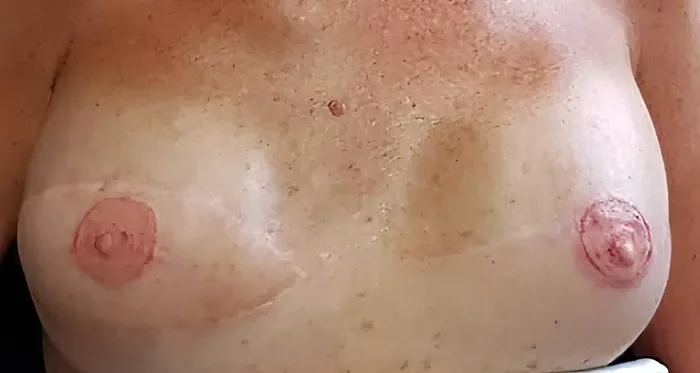
Bilateral healed areola restoration result by Lorraine — natural dimensional pigment after breast reconstruction, paramedical micropigmentation Gold Coast
Bilateral healed result — a real client of Lorraine's, showing the dimensional shading technique that creates the visual illusion of natural areolas across both sides.
  • Bespoke colour matching. Pigment is mixed individually to suit your skin tone, surrounding breast tissue colour, and any remaining natural areolar tone on the unaffected side. Realistic colour-matching is the single biggest factor in whether the healed result reads as natural — and this can only be done in person, at consultation.
  • 3D shading technique. Lorraine uses layered light-and-dark pigment to create the visual illusion of a three-dimensional nipple, even where the tissue beneath is flat. The eye sees the colour gradient and reads it as form.
  • Sensitivity and discretion. The treatment room is private, with no walk-through. Consultations and treatment appointments are unhurried. Many clients have come from years of medical appointments — Lorraine's approach is deliberately the opposite of clinical: warm, supportive, and at your pace.

What to expect

  1. Complimentary consultation

    An unhurried, private conversation about your medical history, surgical timeline, what you want, and what's realistic. Lorraine reviews any photographs from your reconstruction journey if you'd like to share them, checks the area visually, discusses pigment colour, and answers every question. There is no pressure to book at the consultation.

  2. Timing your treatment

    Most clients can have areola restoration 3–6 months after their final surgery. This waiting period allows scar tissue to mature, swelling to settle, and your reconstructed breast shape to stabilise. If you've had radiation therapy, you'll need to wait until the skin has fully recovered. Lorraine will be honest at consultation about whether you're ready or whether more time is needed.

  3. Design and colour matching

    On the treatment day, Lorraine carefully designs the size, position and shape of the areola — for bilateral mastectomy clients this involves agreeing the new areolar position together; for unilateral clients it involves matching the existing natural side. Bespoke pigment is mixed against your skin and tested before the treatment begins. Nothing happens until you've approved the design.

  4. The treatment session (2–2.5 hours)

    Most post-mastectomy clients describe the treatment as comfortable — typically a 1–2 out of 10 on the pain scale. After mastectomy, the breast tissue often has reduced sensation, which means many clients feel only mild pressure or vibration. For clients with intact natural sensation, topical numbing is applied. The shading is built up in light, layered passes.

  5. Aftercare and initial healing

    A light protective dressing is applied immediately after treatment. Aftercare is straightforward: gentle cleansing with fragrance-free soap, applying the provided balm, and avoiding swimming, hot tubs, or direct sun on the area for two weeks. Mild scabbing and flaking is normal between days 5–10 — don't pick. Full surface healing typically completes within 10 days.

  6. Colour settling (4–6 weeks)

    Like all cosmetic tattoo work, the colour appears bolder immediately after treatment and softens significantly over the first 4–6 weeks as the deeper pigment settles. A 'ghost phase' between weeks 2 and 4 can make the colour look lighter or patchy — this is normal and resolves before the follow-up appointment.

  7. 6–8 week paid follow-up

    The refining session — where Lorraine adds depth, sharpens the dimensional shading, and corrects anywhere the colour healed lighter than expected. Most paramedical work requires this follow-up to reach its final result. It's a separate appointment, booked and priced on its own so the cost is transparent.

  8. Long-term maintenance

    Areola restoration fades gently over 2–4 years, lightening rather than changing colour. A refresh appointment every few years (or longer, if you prefer) maintains the dimensional effect.
Quick facts

  • Treatment time2–2.5 hours
  • SessionsPer session; follow-up separate
  • Wait time3–6 months post-surgery
  • PricingOn consultation
  • LocationRunaway Bay, Gold Coast
  • PractitionerLorraine Nugent
Book Online → Enquire first
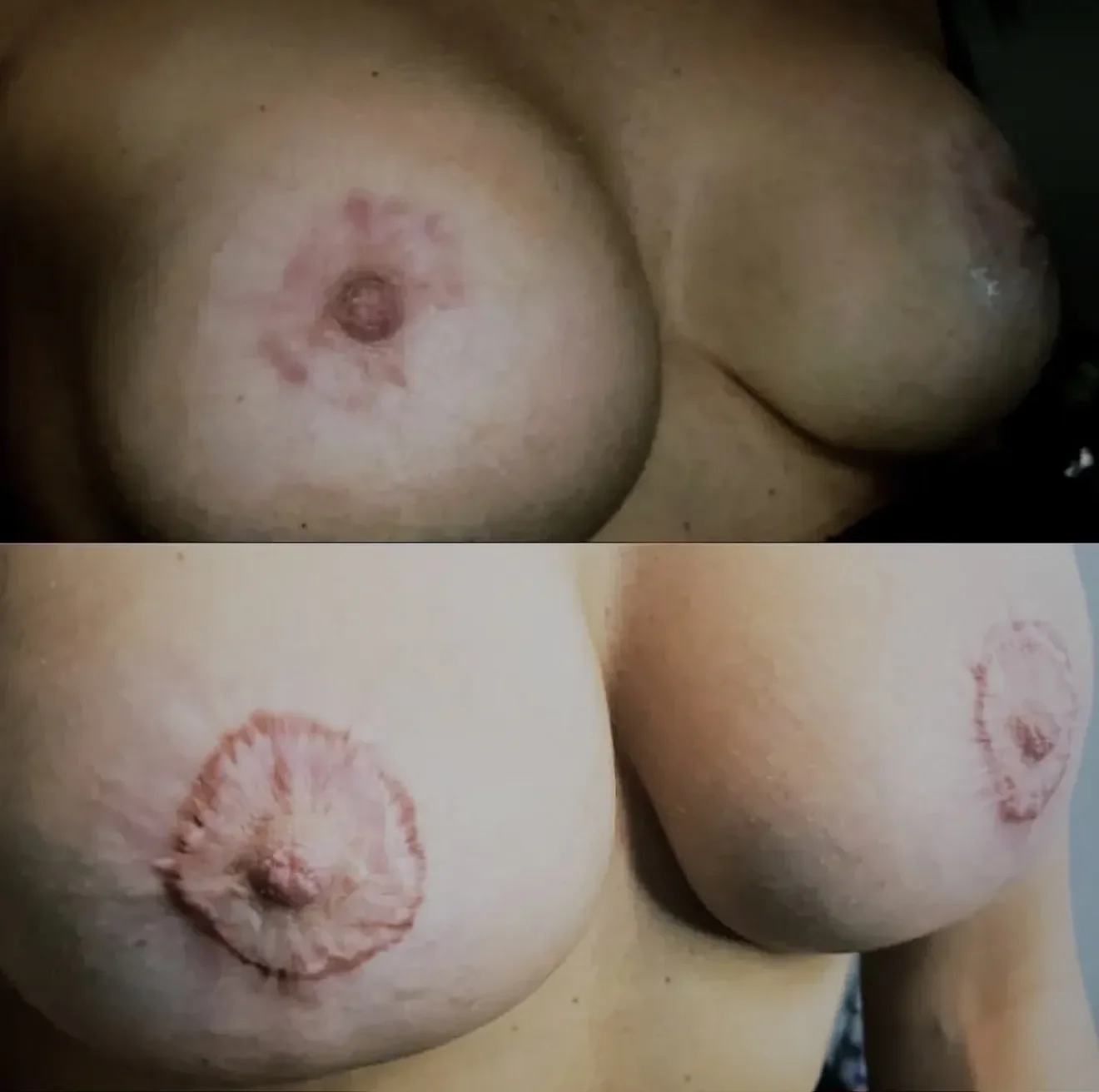
Areola restoration before and after — paramedical micropigmentation by Lorraine showing fresh treatment (top) and healed natural result (bottom)
Top: fresh after treatment. Bottom: the same client, healed and settled.
Real results

Real client results

A single client, photographed at two stages — fresh after treatment (top) and the same client once fully healed (bottom). The healed result is what stays.

  • Bespoke colour — pigment mixed individually to match skin tone and any remaining natural areolar colour.
  • 3D dimensional shading — layered light and dark pigment creates the visual illusion of form, even on flat reconstructed tissue.
  • Symmetry restored — areola size, shape and position matched carefully across both sides.
  • Settles softer over weeks — fresh colour softens significantly through the 4–6 week healing process to its final natural tone.

Photo shown is a real client of Lorraine's, used with permission. Every result is bespoke to your skin, your anatomy and your reconstruction journey.

FAQs

Questions about Areola Restoration

When can I have areola restoration after my surgery?

Most clients can be treated 3 to 6 months after their final reconstructive surgery. The waiting period allows scar tissue to mature, swelling to fully settle, and your final breast shape to stabilise. If you've had radiation therapy you may need to wait longer — usually until the skin has fully recovered, which Lorraine will assess at consultation. For clients with significant scarring around the area, scars should ideally be six months healed minimum before tattoo work over the top.

Does it hurt?

For most post-mastectomy clients, the answer is no — or very little. After mastectomy and reconstruction, the breast tissue often loses sensation, so most clients feel only mild pressure or vibration during the treatment, typically rated 1–2 out of 10. Clients with intact natural sensation (asymmetry correction, pigment loss, age-related fade) are given topical numbing to keep things comfortable. Lorraine will discuss this in detail at consultation based on your specific case.

Will my new areola feel real?

Areola restoration restores the visual appearance — colour, shape, dimensional shading, symmetry. It does not restore sensation. For most clients this is well-understood by the time they reach Lorraine; she discusses it openly at consultation so expectations are clear from the beginning.

How realistic does the result look?

Done well, very. Lorraine uses light-and-dark layered shading to create a three-dimensional illusion of nipple and areola, even where the tissue beneath is flat. From normal viewing distance — including under clothes, in mirrors, with partners — the appearance is natural and dimensional. The technique is deliberate; the goal is realism, not perfection.

Will it look the same as my other side (for unilateral mastectomy)?

Lorraine carefully matches the position, shape, size and colour of the new areola to your remaining natural side. Photographic reference is taken at consultation, and the design is reviewed and approved with you in the mirror before any pigment is placed. For most unilateral clients, the goal is bilateral visual symmetry under clothing and in mirrors.

Will it fade?

Yes — gradually and gently. Areola tattoos typically last 2 to 4 years before colour softens enough that a refresh is recommended. Some clients leave it longer if they prefer the softening as it happens. The pigments Lorraine uses are EU-certified and fade as lighter versions of the original tone — they don't shift to red, blue or grey over time.

Is the follow-up necessary?

Yes, almost always. The follow-up at 6–8 weeks is where the colour and dimensional shading are refined to their final state. Different clients heal differently — some retain pigment beautifully, others need additional layering in specific areas. The follow-up appointment is booked and priced separately so the total cost is transparent up front.

What's the aftercare like?

Straightforward. A light dressing for the first few hours, then gentle cleansing with fragrance-free soap once or twice daily, applying the provided balm thinly. Avoid swimming, hot tubs, sauna, and direct sun on the area for two weeks. Wear a soft loose top for the first few days if you can. Some mild flaking is normal between days 5–10 — don't pick. Full written aftercare is provided at the appointment.

Who shouldn't have areola restoration?

Clients currently in active radiation therapy or chemotherapy should wait until treatment is complete and the skin has recovered. Clients with a history of keloid scarring need careful assessment at consultation. Active skin infections in the area, uncontrolled diabetes, certain autoimmune conditions, and clients on blood thinners without GP clearance may need to defer. Lorraine reviews medical history thoroughly at consultation — bring a current medication list, your surgical and oncology timeline, and any relevant medical correspondence.

Do you accept doctor referrals?

Yes. Many of Lorraine's areola restoration clients come on the recommendation of their breast surgeon, oncologist or breast care nurse. If you'd like Lorraine to communicate with your medical team about your case, she's happy to — with your written consent. Some private health insurers may also offer rebates for paramedical micropigmentation; check with your provider.

How private is the appointment?

Completely. The treatment room is private with no walk-through and no shared space. You can bring a support person to the consultation if that helps. Treatment appointments are deliberately unhurried — there's no clock-watching. Most clients describe Lorraine's approach as the opposite of clinical: warm, supportive, and at your pace.

How much does it cost?

Areola restoration pricing is provided on consultation, as it depends on factors like whether the treatment is unilateral or bilateral, the complexity of the case (existing scarring, asymmetry, previous tattoo work), and the technique chosen. The paid follow-up at 6–8 weeks is a separate appointment, booked and priced on its own. The complimentary in-person consultation is the easiest way to get a clear answer for your specific case, with no obligation to book.

Concerns this treats

If you came here looking to solve one of these, you're in the right place:

  • After breast cancer / mastectomy
Begin your journey

Enquire about Areola Restoration

Send Lorraine a message — she'll respond personally to talk through whether this treatment is right for you.

You're enquiring about: Areola Restoration

Related treatments

Scar Camouflage

Skin-tone pigmentation to soften the appearance of scars.

View →

Alopecia Brow Recreation

Brow recreation for alopecia, chemotherapy and hair loss.

View →

Tricopigmentation (Scalp)

Density and hairline restoration for thinning hair.

View →

Ready to begin? Book your consultation.

Every treatment starts with a personal consultation. No pressure — just an honest conversation about what's right for you.

Book Online → Send a Message
Cosmetic Tattoo by Lorraine — Skin & Plasma Fibroblast, Gold Coast

Premium cosmetic tattoo, advanced skin treatments, plasma fibroblast and paramedical artistry — Runaway Bay, Gold Coast.

Instagram

Treatments
  • Cosmetic Tattoo
  • Paramedical
  • Skin Treatments
  • Plasma Fibroblast
  • All Treatments
Concerns
  • Lips
  • Brows
  • Eyes
  • Skin
  • Restoration & Paramedical
  • Hair loss
  • All Concerns
Studio
  • About Lorraine
  • Gallery
  • Locations
  • Book Online
Visit
  • 465 Oxley Drive
  • Runaway Bay QLD 4216
  • 0401 847 167
  • Send a message
© 2026 Cosmetic Tattoo by Lorraine. All rights reserved. Privacy  ·  Terms  ·  Sitemap