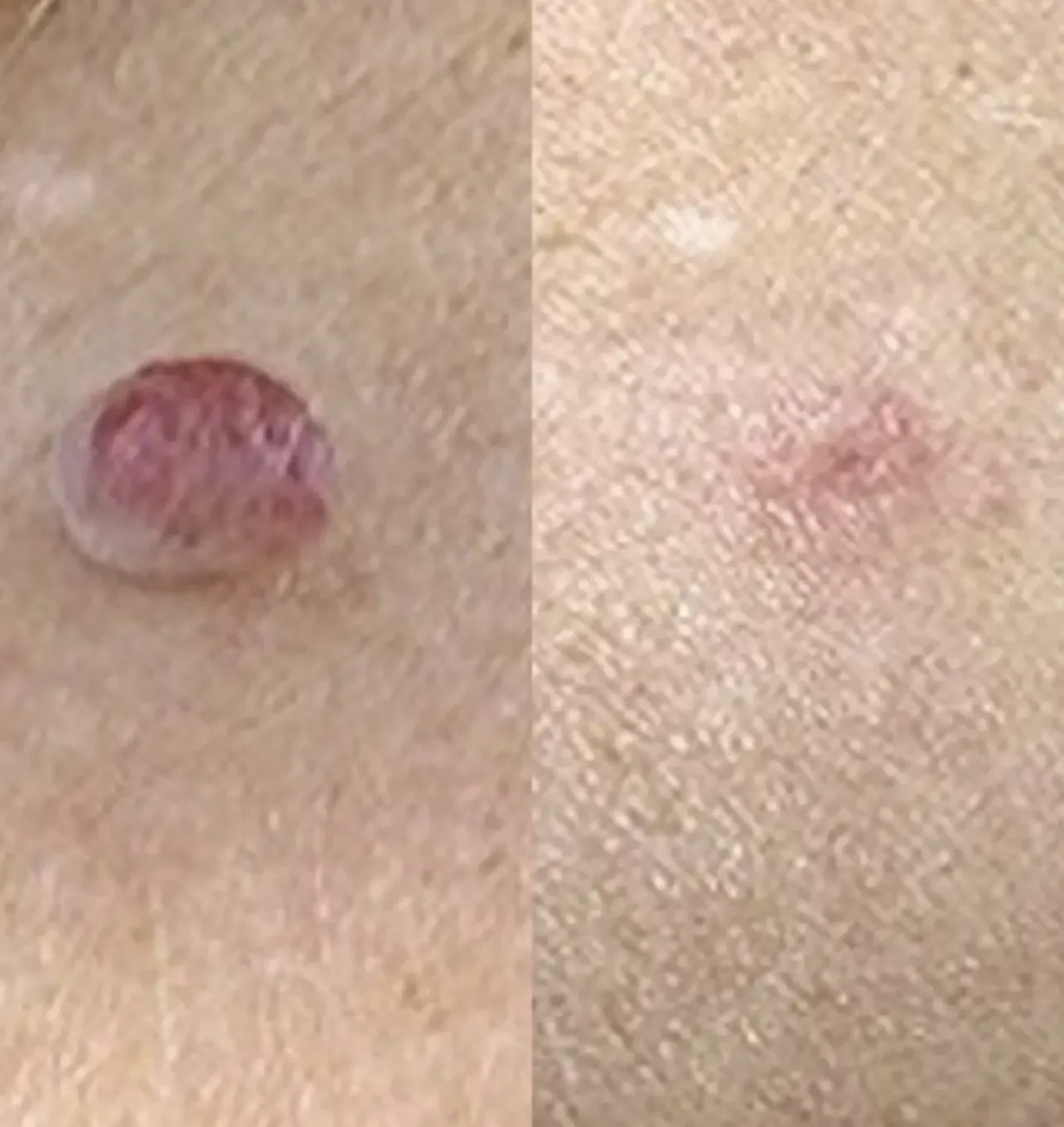
About cosmetic cryotherapy
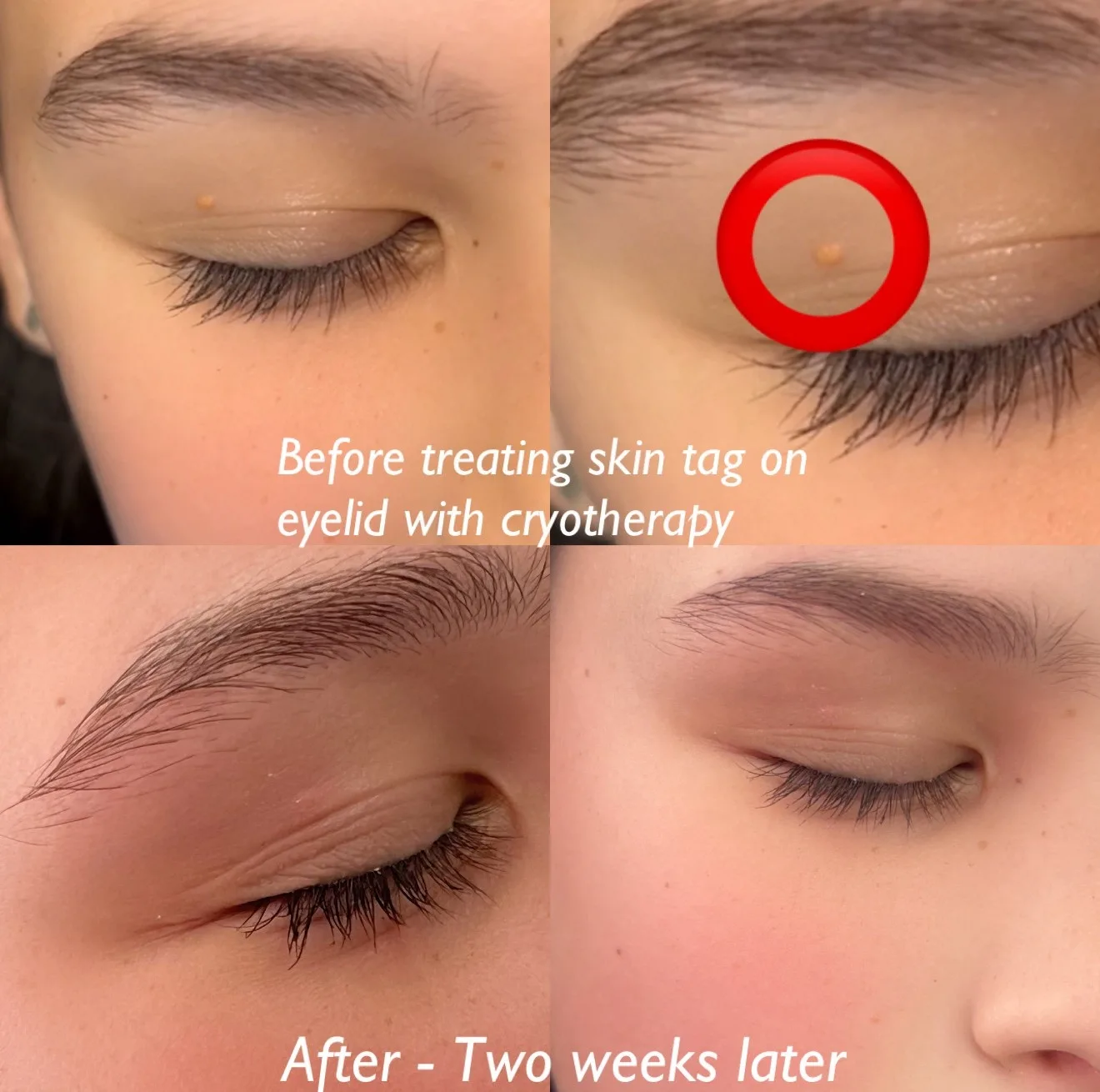
Cosmetic cryotherapy is one of the quickest, lowest-fuss treatments Lorraine offers. A fine applicator delivers a controlled, precisely targeted burst of very cold gas directly onto the lesion. The cold freezes the targeted skin cells, which then break down and shed away naturally over the following one to two weeks. Most single lesions take only seconds to treat, and there are no needles, no cutting, and no stitches.
It's a precise, low-risk alternative to surgical removal for cosmetic-grade lesions — the kind your GP has often already looked at and told you are harmless, but that you'd simply rather not see anymore.
What cryotherapy treats
Lorraine uses cosmetic cryotherapy for a range of common benign lesions:
- Skin tags — on the face, neck, underarms, eyelids and body.
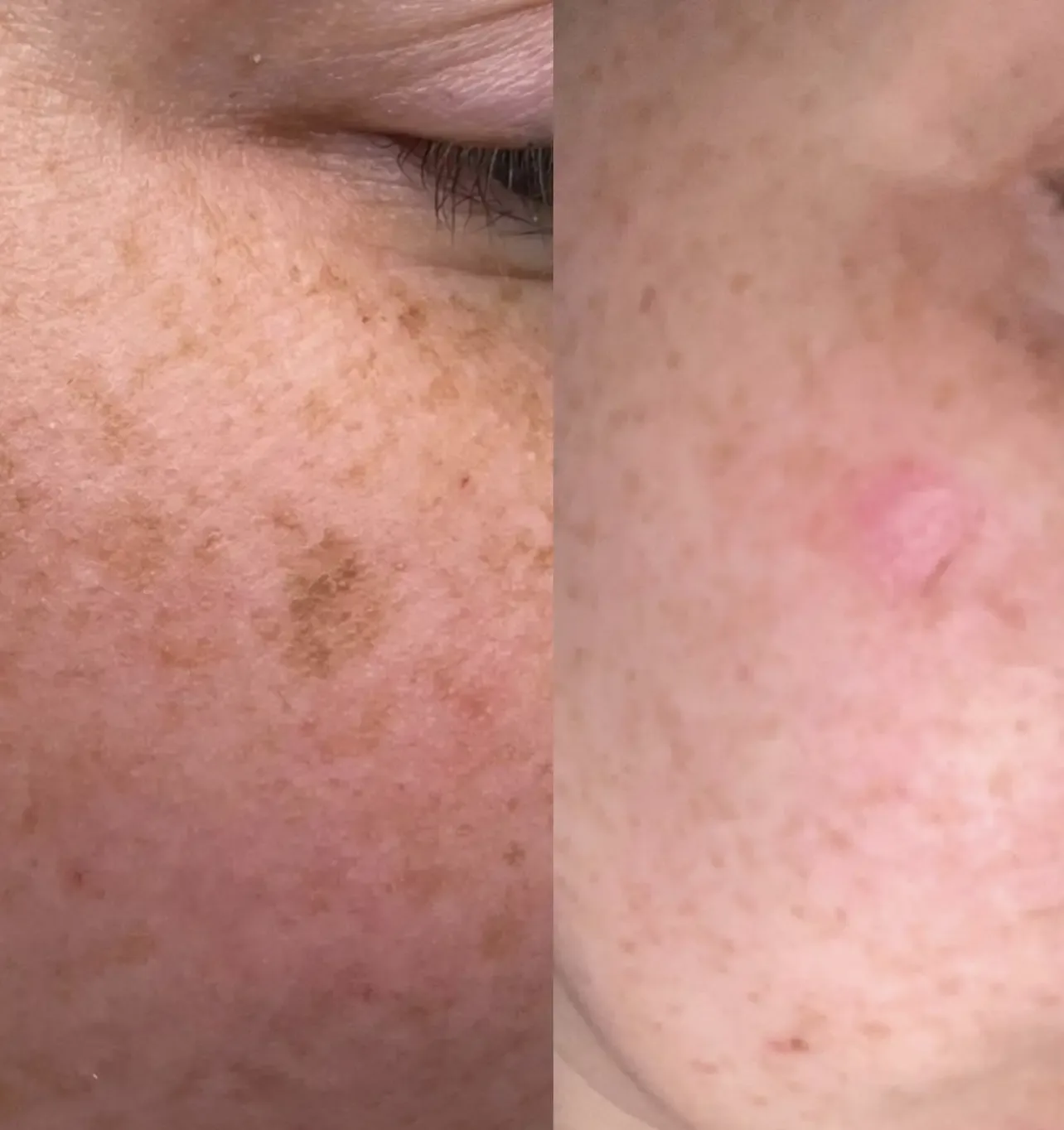
- Age spots and sun spots (solar lentigines) — flat brown pigmentation from years of sun exposure.
- Cherry angiomas — small raised red dots that appear with age.
- Milia — small white surface bumps that don't extract easily.
- Seborrhoeic keratoses — waxy, raised brown growths.
- Small verrucas and warts — case-dependent, assessed individually.
How the lesion clears — what to expect as it heals
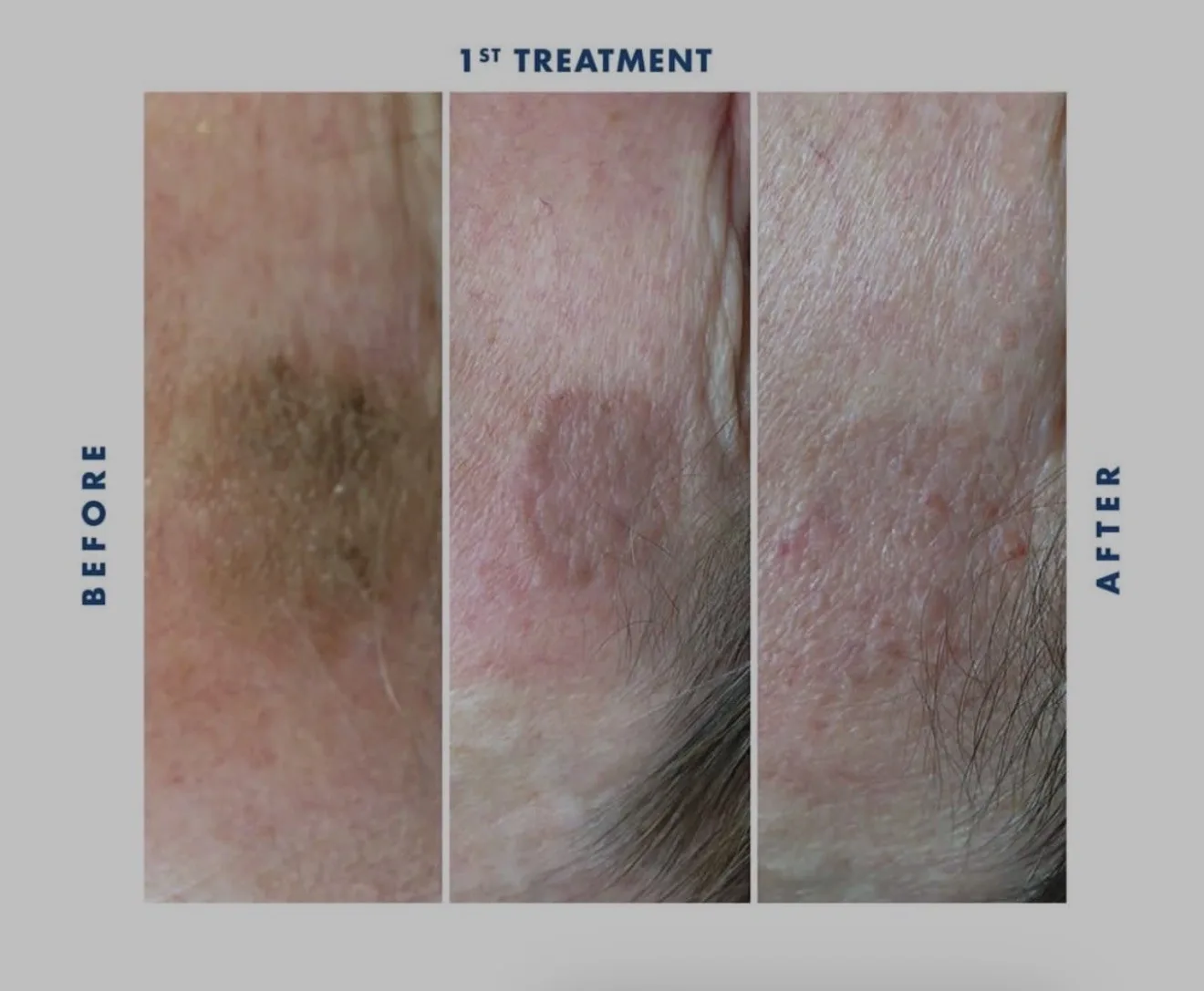
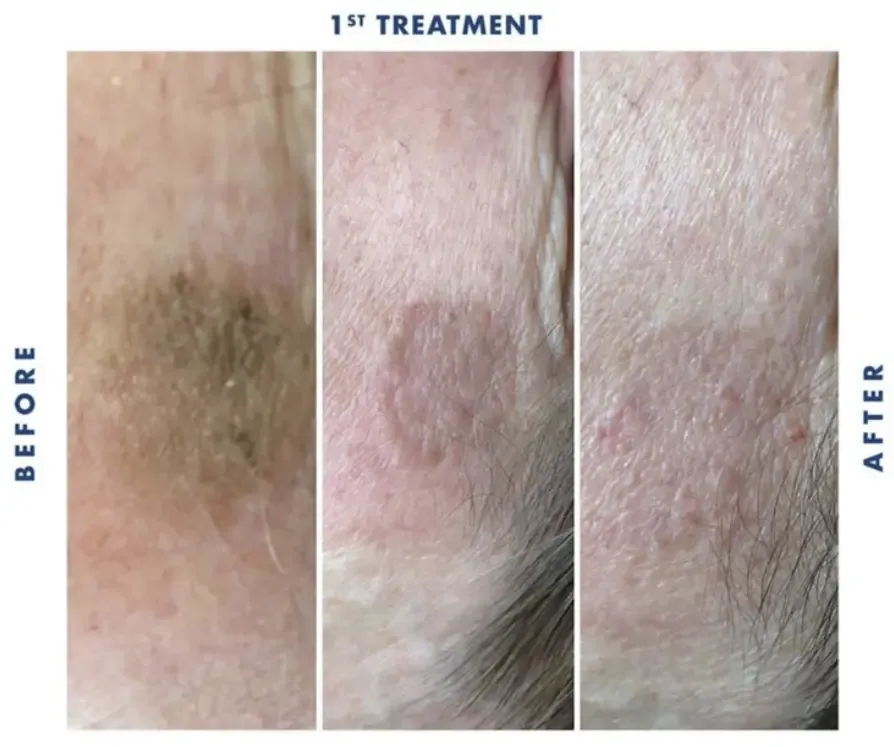
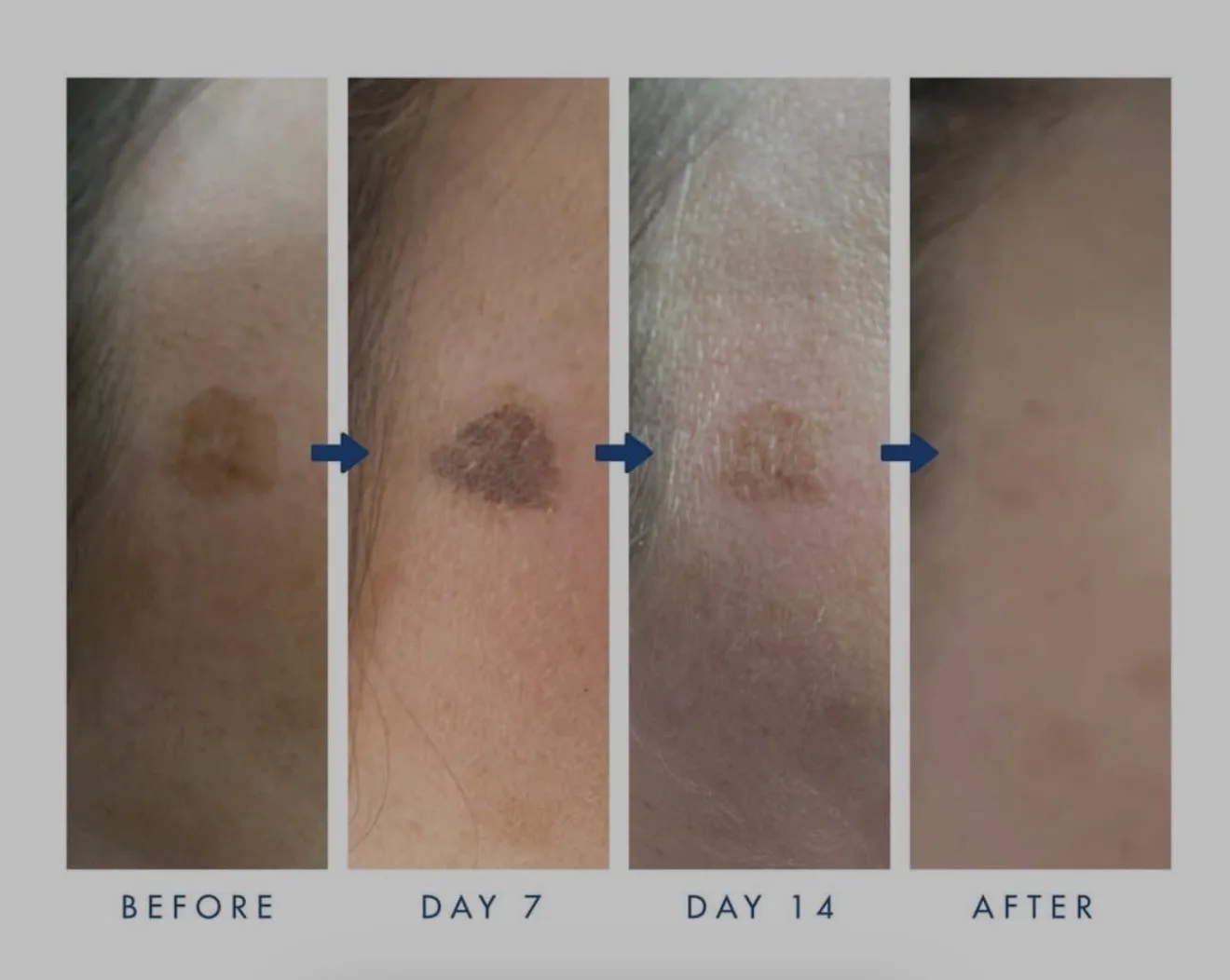
After treatment the lesion typically darkens and forms a small scab over the first few days, then lifts and sheds naturally. The skin underneath is usually clearer and more even. The sequence below shows a real client's pigmented lesion through the healing stages.
Safety first — benign cosmetic lesions only
This is the most important thing to understand about cryotherapy at Lorraine's clinic. She treats only clearly identified, benign cosmetic lesions. If there is any suspicion that a spot may need medical assessment — an atypical or changing mole, anything altering in shape, size or colour, anything bleeding or unusual — Lorraine will not treat it and will refer you back to your GP first. Cosmetic cryotherapy is never a substitute for proper medical evaluation of a suspicious lesion. If in doubt, it gets checked, not frozen.
What makes Lorraine's approach different
With 20 years in the cosmetic industry, Lorraine brings the same precision to lesion work that she brings to her cosmetic and paramedical tattooing — careful assessment, a steady hand, and an honest conversation about what's realistic. Treatment happens in a private room at her Ashmore studio on the Gold Coast, and she'll always tell you if she thinks a lesion is better left alone or better seen by a doctor.
What to expect
-
Consultation and lesion check
Lorraine looks at each lesion you'd like treated and confirms it's a benign cosmetic lesion suitable for cryotherapy. Anything that looks like it needs medical assessment is referred to your GP first — this step is non-negotiable. A consultation is $50 and lets her quote accurately for what you want done.
-
The freeze (seconds per lesion)
A controlled burst of very cold gas is applied directly to the lesion, usually for just a few seconds. No anaesthetic is needed. Most clients describe it as a brief, sharp cold sting — similar to ice held against the skin — that passes quickly. Multiple lesions are handled in one 15–30 minute visit.
-
The first few days
The treated lesion may look darker, red, or slightly swollen, and will often form a small scab. This is exactly what should happen. Leave it alone — don't pick or scratch — and keep the area clean. Lorraine provides simple aftercare guidance.
-
Shedding (7–14 days)
Over the next one to two weeks the treated lesion lifts and sheds away naturally, revealing clearer skin underneath. A small patch of temporarily lighter skin (hypopigmentation) can appear at the site and usually settles over the following weeks to months.
-
Optional 4–6 week touch-up
Larger or more stubborn lesions sometimes need a second freeze to clear completely. If so, a touch-up at 4–6 weeks is $100, booked separately. Many lesions clear fully in a single treatment.