About alopecia brow recreation
Losing your eyebrows changes your face in a way that is hard to explain to anyone who hasn't been through it. Many of Lorraine's clients describe finally feeling well again after illness — but not feeling like themselves, because the face in the mirror looks unframed and unfamiliar. Brows do quiet, important work: they frame the eyes, carry expression, and signal health. When they're gone, people notice the absence even when they can't name it.
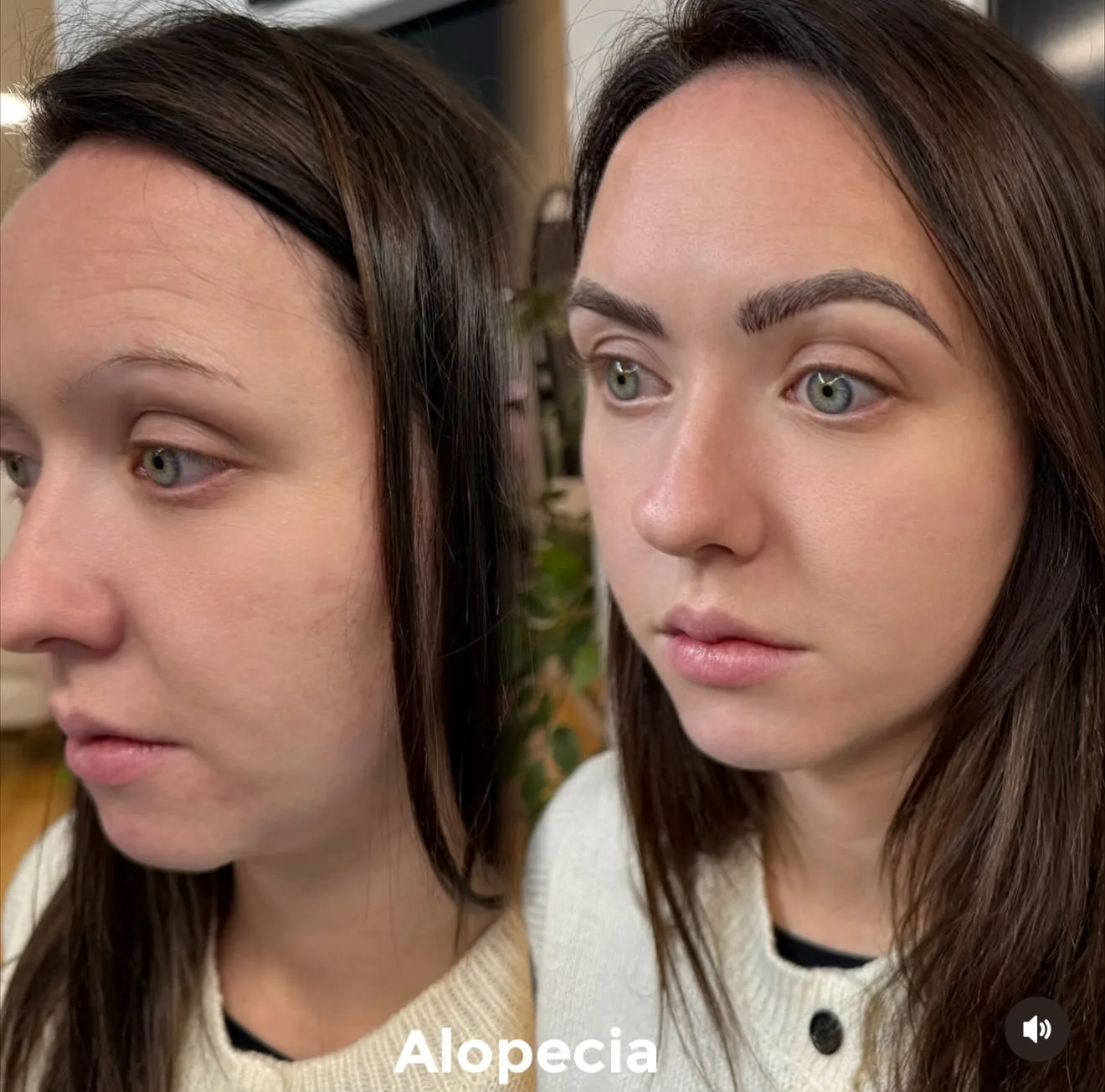
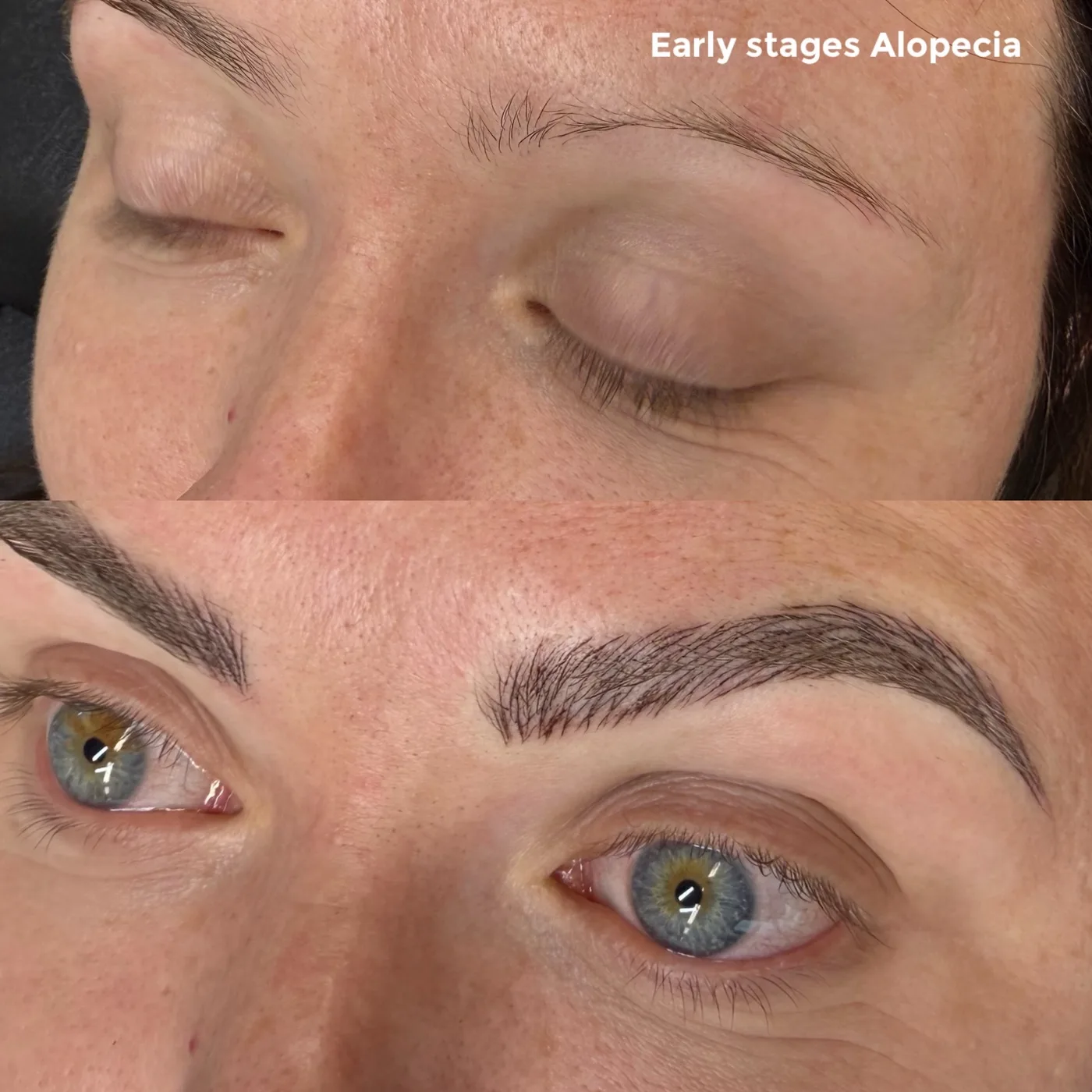
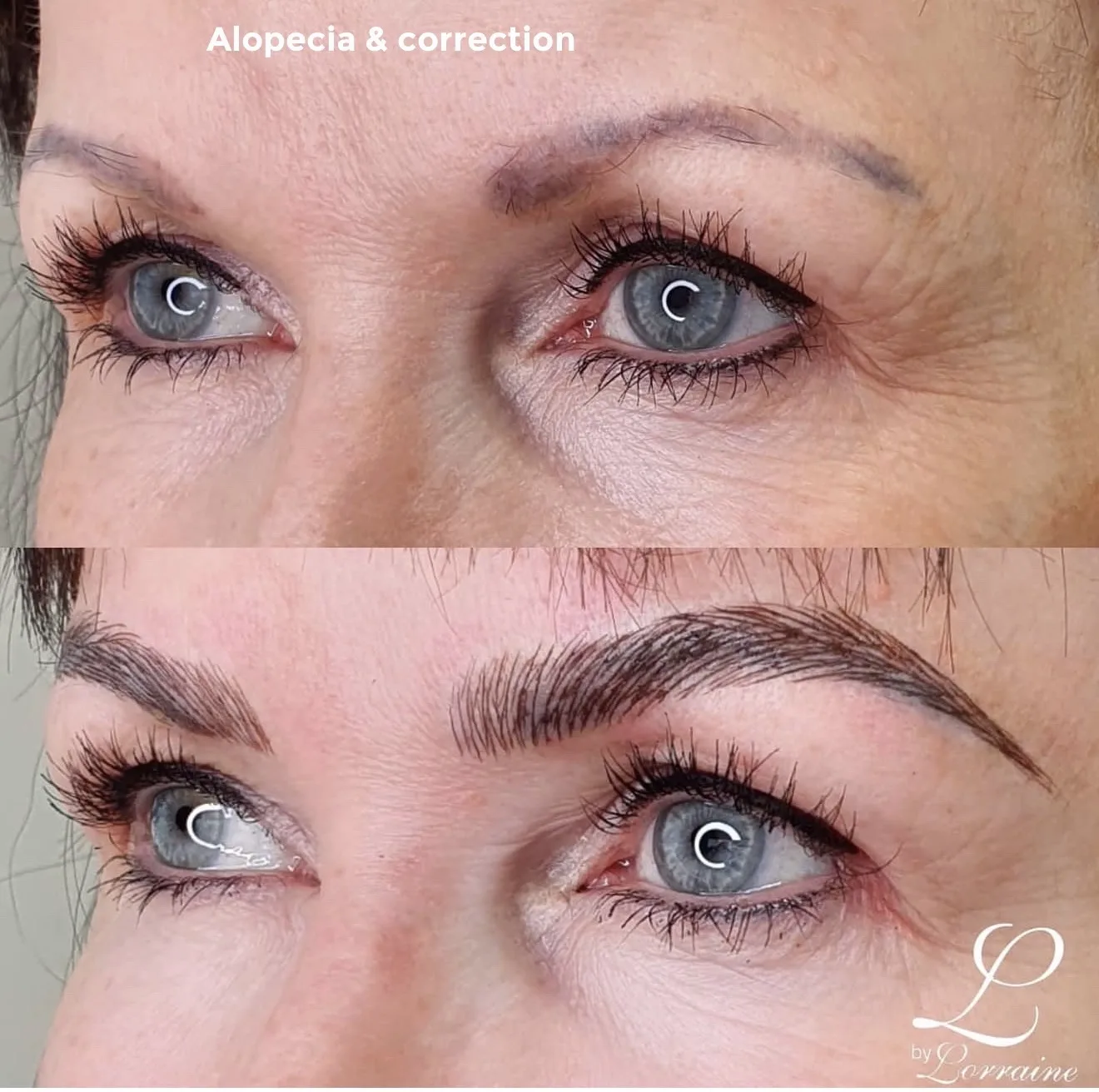
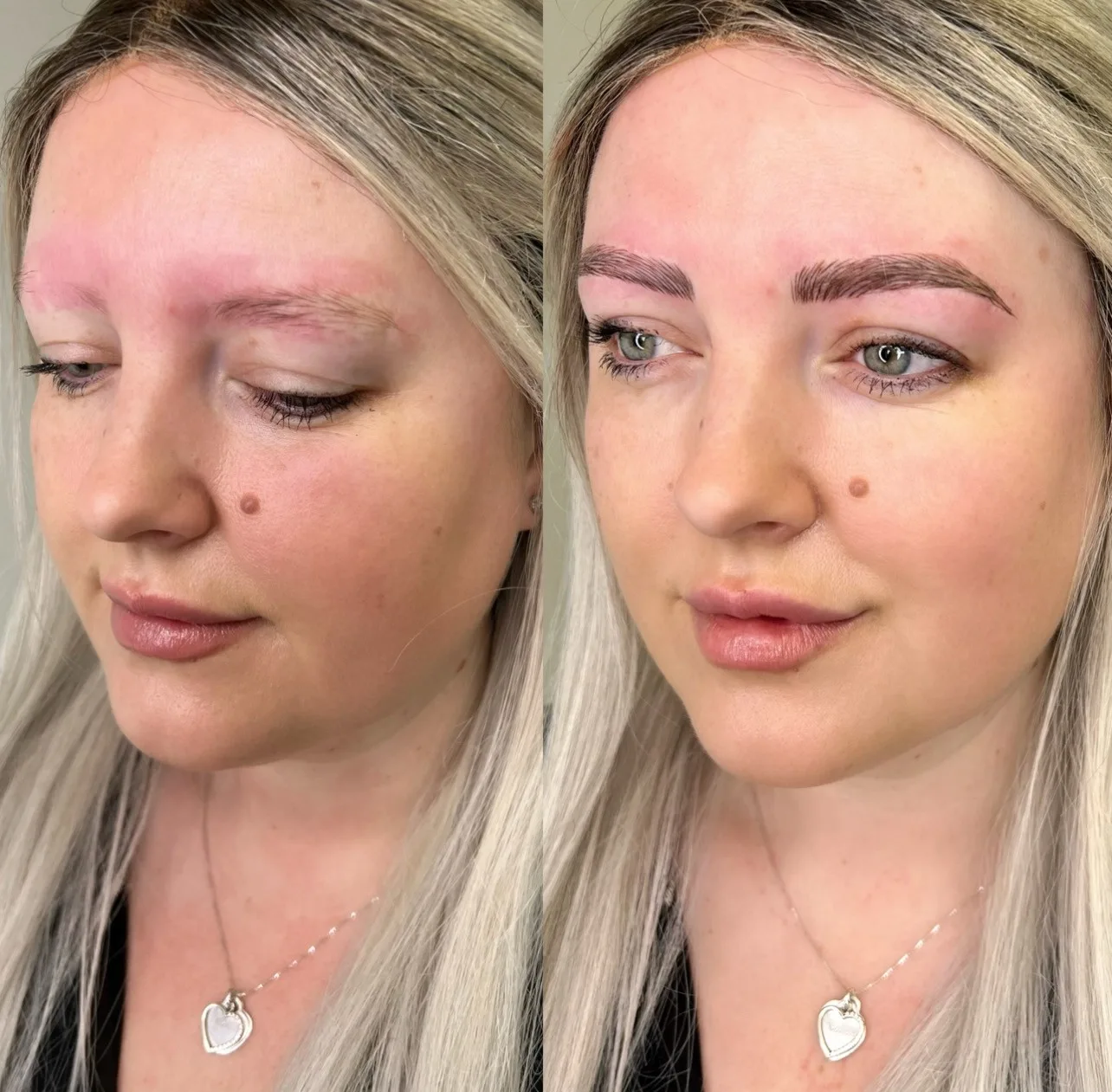
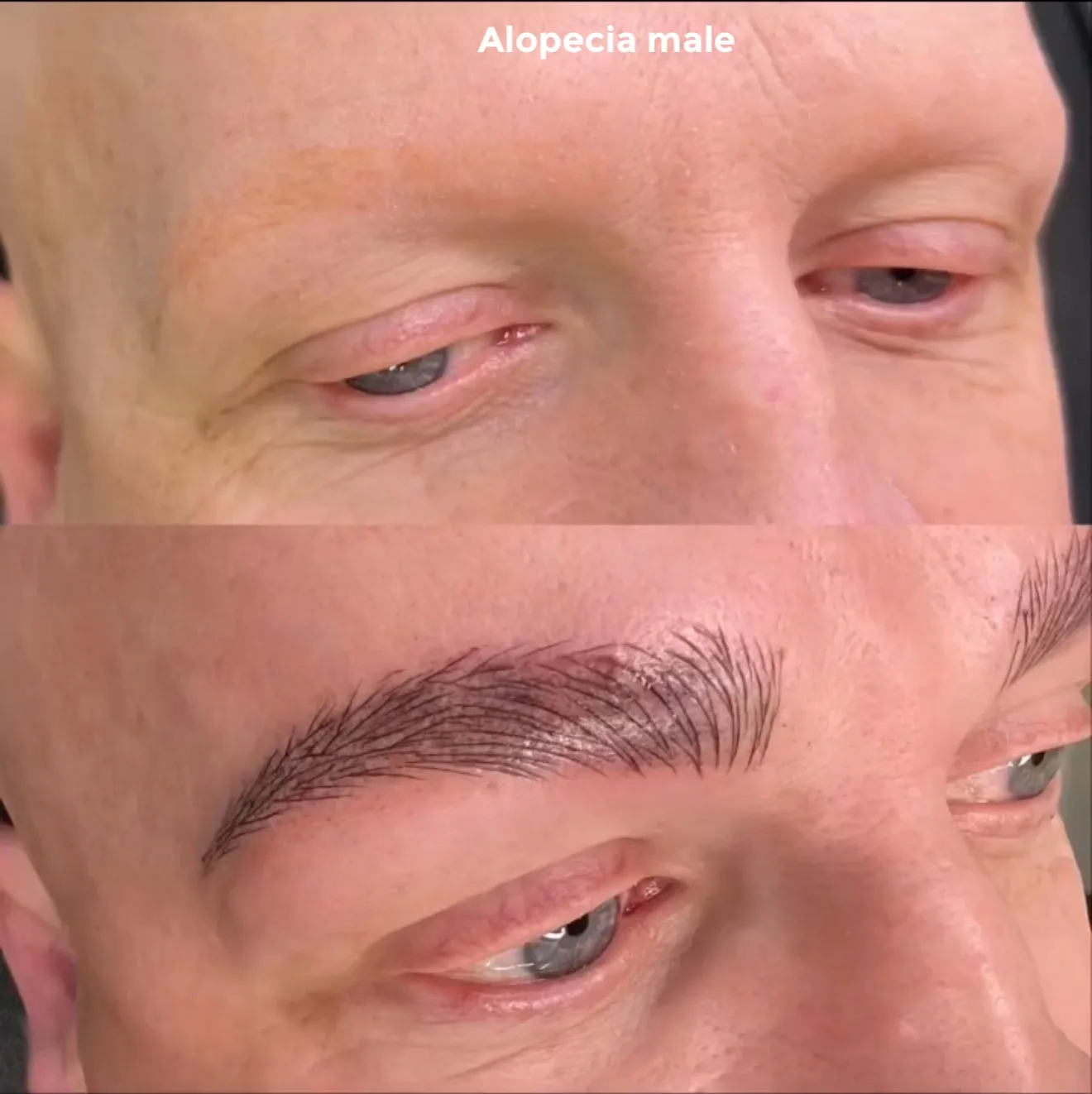
Alopecia brow recreation rebuilds that frame. Using the same fine, hand-tooled hair-stroke technique as her 3D Feather Brows work, Lorraine draws individual strokes into the skin — one at a time, in the direction brow hair naturally grows — to recreate a soft, realistic brow where little or no natural hair remains. The healed result reads as brow hair at conversational distance, not as makeup and not as a solid tattooed shape.
Who alopecia brow recreation is for
Unlike a standard cosmetic brow tattoo, this treatment is designed specifically for clients who have little or no natural brow hair to work alongside. Lorraine regularly treats:
- Alopecia areata, totalis and universalis — autoimmune hair loss affecting the brows partially or completely.
- Chemotherapy clients whose brows have not regrown, or have regrown sparse and patchy, after treatment.
- Trichotillomania — clients ready for restoration once hair-pulling has stopped and the area is settled.
- Thyroid and hormonal hair loss with persistent, significant brow thinning.
- Men and women alike — brow loss affects everyone, and the technique is tailored to suit a natural masculine or feminine shape.
- Faded previous tattoo work where a full re-design is needed rather than a simple refresh.
How Lorraine approaches it
With no existing brow hair to follow, the shape becomes everything. Lorraine maps a brow that suits your face — using your bone structure, your features, your hair colour, and, if you have them, reference photographs of your brows from earlier in life. The shape is drawn on and reviewed in the mirror with you before any pigment is placed. Nothing happens until you're happy with the design.
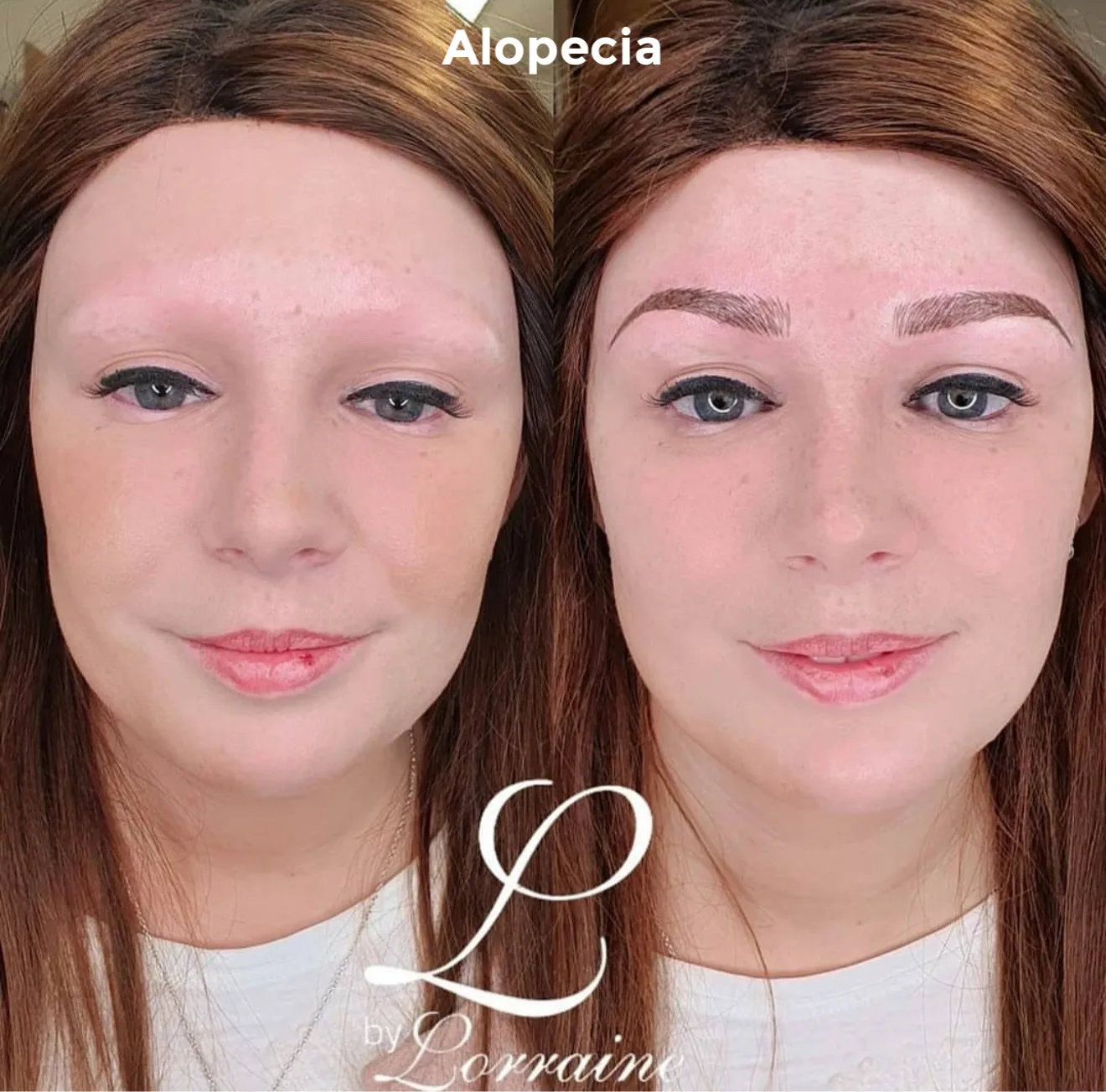
The strokes themselves are placed with a fine hand tool rather than a machine, which gives Lorraine finer control over the length, angle and depth of each line — important when the entire brow is being built from nothing. Pigment is mixed bespoke to your skin tone and hair colour so the result looks like your brow, not a standard shade applied to everyone.
Timing and medical considerations
For clients in or recovering from cancer treatment, timing matters and safety comes first. Treatment generally waits until you have been cleared by your medical team and the skin in the brow area has fully recovered — often several months after the end of active treatment, though every case is different. Lorraine welcomes doctor referrals and is happy to coordinate with your oncologist, GP or specialist nurse with your written consent. There is never any pressure to book; the consultation exists to work out what's right and safe for you.
Paramedical & restorative guides
- Eyebrow tattoo after chemo: what to expect
- Areola tattoo after mastectomy (3D nipple tattoo)
- Scalp micropigmentation for thinning hair
What to expect
-
Complimentary consultation
An unhurried, private conversation about your hair-loss history, your medical situation, and what you'd like your brows to look like. Lorraine assesses the skin, discusses shape and colour, reviews any old photographs you'd like to share, and is honest about timing. There's no obligation to book.
-
Timing it safely
For chemotherapy and medical clients, treatment waits until your medical team has cleared you and the skin has fully recovered. Lorraine is happy to liaise with your doctor. For non-medical alopecia where the area is stable, treatment can usually proceed once mapped and agreed.
-
Shape mapping and colour design
Because there's no natural hair to follow, Lorraine designs the brow shape from your facial proportions and features — and from reference photos of your earlier brows if you have them. The shape is pre-drawn and reviewed in the mirror; bespoke pigment is mixed to your skin tone and hair colour. You approve everything before treatment begins.
-
The recreation session (2–2.5 hours)
Medical-grade topical numbing is applied and refreshed throughout. Lorraine builds the brow stroke by stroke with a fine hand tool, establishing the outline first and then layering density across the body and tail. Most clients find the session calm and surprisingly relaxing.
-
Healing weeks
Brows look bold and dark for the first 5–7 days, then lighten dramatically through a 'ghost phase' as the top layer of skin sheds, before the deeper pigment re-emerges as the final colour settles over weeks 3–6. Clear written aftercare and balm are provided.
-
6–8 week paid follow-up
The refining session, where Lorraine adds strokes anywhere the colour healed lighter, sharpens definition, and perfects symmetry. Most paramedical brow work benefits from this step. It's a separate appointment, booked and paid on its own — recommended, but never an obligation.
-
Long-term maintenance
Hair-stroke brows last around 12–18 months before the colour softens and a refresh is worthwhile. The fade is gentle and even, never patchy. A colour refresh is a shorter session than the original recreation.